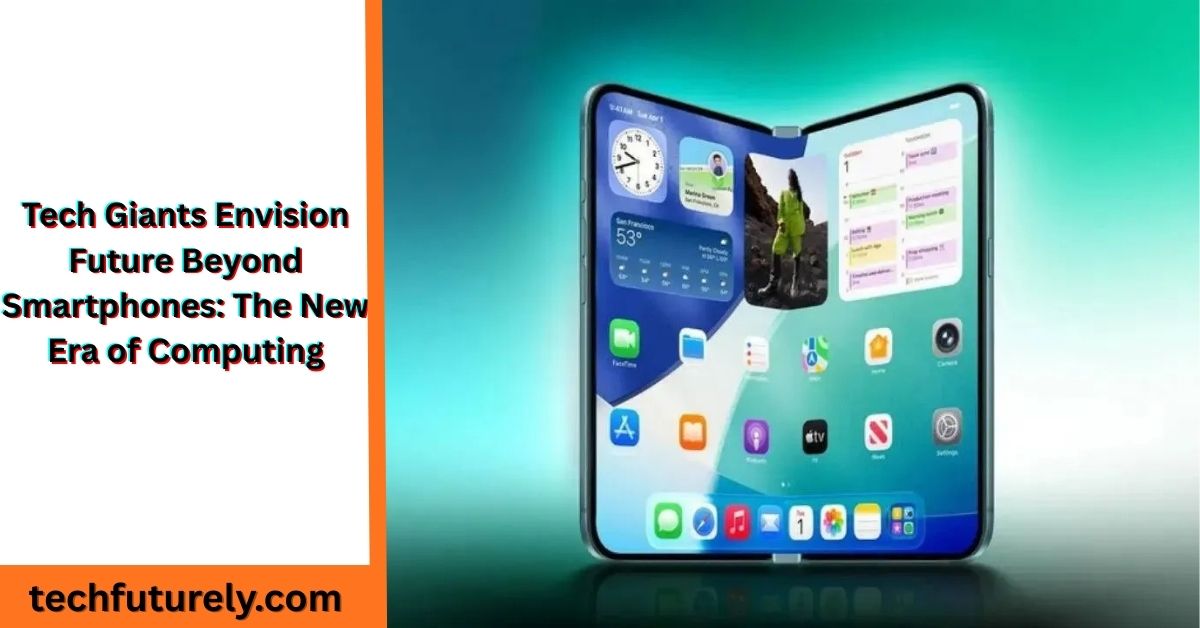
For the past decade, smartphones have been the gateway to the digital world. People used them to chat, shop, play, and work. But today Tech Giants Envision Future Beyond Smartphones as the next big shift in technology. In other words, companies like Apple, Google, Meta and Microsoft are already preparing for a post-smartphone era. They see a future where AI and new devices quietly help us instead of demanding our constant attention. In that vision, computing spreads out beyond a single phone into many forms – augmented reality glasses, smart rings and earbuds, voice assistants, and smart environments. Essentially, technology becomes less visible and more helpful in our daily life.
Imagine no longer reaching for your phone every time you need information. Instead, a smart assistant in your glasses or earbuds might automatically translate a conversation or remind you of a meeting as you walk. This is the promise of the AI-first, context-aware future. People crave tech that feels “calm, intelligent, and supportive” rather than noisy and distracting. So major tech companies are redesigning our interfaces: moving from tapping screens to talking, gazing, or gesturing, and letting AI coordinate behind the scenes.
Below is a quick look at some of the leading firms behind this shift:
| Company | Founded (Founder/CEO) | Beyond-Smartphone Focus |
|---|---|---|
| Apple | 1976 (Steve Jobs, CEO Tim Cook) | Pioneering spatial computing (Vision Pro AR headset), aiming to release Apple Glasses by ~2026. |
| 1998 (Larry Page, CEO Sundar Pichai) | Developing AI-powered smart glasses (Android XR + Gemini), partnering with Warby Parker (2026 launch). | |
| Meta | 2004 (Mark Zuckerberg) | Expanding VR/AR (Quest headsets, Horizon World) and Ray-Ban smart glasses; CEO calls glasses the “ideal form factor” for a personal AI. |
| Microsoft | 1975 (Bill Gates, CEO Satya Nadella) | Focused on enterprise mixed reality (HoloLens) and AI (Copilot) for business; exploring future consumer XR devices. |
| OpenAI | 2015 (Sam Altman) | Advancing ambient AI assistants that run continuously across devices, aiming to handle tasks without apps. |
Tech Giants Envision Future Beyond Smartphones: Why Change Is Coming
Several forces are pushing us beyond the smartphone age. First, the classic phone upgrades have slowed. New phones still have faster chips and sharper cameras, but each year’s changes are smaller and less thrilling than before. In short, bleeding-edge specs don’t change our habits like they used to. With less “wow factor” in new devices, people delay upgrades.
Second, screens can be fatiguing. Our phones constantly buzz with notifications, cutting into our focus. A study even showed too much screen time can stress users out. So many people would rather use lighter, more natural ways to interact – for example, talking or pointing – instead of staring at an app menu.
Finally, AI itself needs a new front end. Modern AI can summarize messages, manage our schedules, and translate speech in real-time. Yet today we still make it work through clunky apps. Tech leaders believe that restricting AI to phone apps wastes its potential. Instead, they want AI to be the main interface: you simply express a goal, and AI does the rest. For instance, instead of opening 10 apps, you might just say, “Summarize today’s emails,” and an AI agent handles everything for you. This shift – from screen-first to AI-first, intent-driven computing – is exactly what tech giants envision future beyond smartphones to mean.
Key Technologies Fueling the Post-Smartphone Era
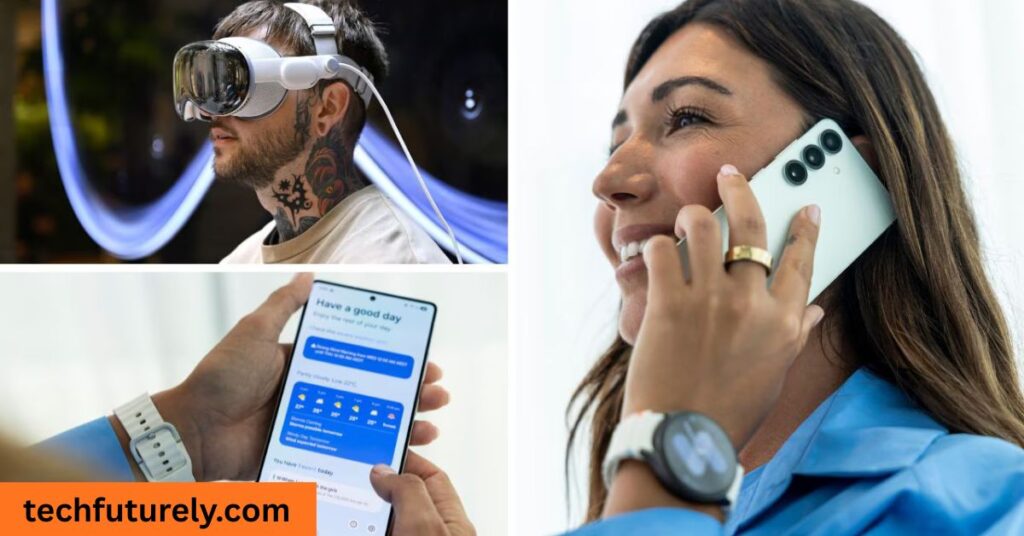
The coming decade will be powered by several innovations working together:
AI as the Interface
Think of AI assistants (like Siri, Google Assistant, ChatGPT) doing more than answer voice queries. They’ll learn routines and anticipate your needs. You could tell your AI, “Plan a dinner with friends next week,” and it will book a table, share updates, and remind everyone. Because AI knows your context, using it feels faster and more natural than juggling apps.
Smart Glasses & Augmented Reality
Glasses that overlay digital info onto the real world are a big focus. For example, companies are demoing glasses that display directions on the lens or translate signs as you look at them. Meta’s new Ray-Ban smart glasses (with a tiny screen) already show notifications right in your view. The advantage: you stay aware of your surroundings while tech augments what you see. Both Apple and Meta are pouring resources into sleek AR eyewear as the long-term “next screen”.
Spatial Computing / Mixed Reality
Spatial computing means surrounding yourself with 3D info. Imagine virtual monitors floating in your room or a remote colleague sitting next to you via hologram. This tech blends physical and digital space. It’s especially useful for work and training: surgeons can rehearse with virtual bodies, factories can have simulated equipment, and teams across cities can collaborate in a shared virtual room. Google, Apple and Microsoft are all working on platforms to make spatial computing practical.
Wearables & Ambient Devices
Besides glasses, tiny gadgets and sensors help too. Smart rings and watches (like the Oura Ring) can monitor your health and tell your assistant when you’re jogging or sleeping. Ambient devices, like smart speakers or even lights and thermostats, will act on your behavior without prompting. Together, these reduce the need to pull out your phone for quick tasks. For instance, a smart thermostat could set itself based on your location, or earbuds might pause music when they detect you speaking.
Brain–Computer Interfaces (Long-Term)
A more futuristic path involves devices that read brain signals. This is still experimental, but companies like Neuralink (founded by Elon Musk) are exploring how tiny brain implants could let people type or control tech just by thinking. While the consumer version is distant, it represents the ultimate “screenless” computing interface.
For example, the push for spatial computing could lead to devices that help in training simulations or virtual office meetings:
- Immersive work environments
- Training and simulation programs
- Remote collaboration with shared 3D visuals
- 3D data visualization and modeling
These are a few ways the new tech could reshape daily tasks.
How Major Companies Are Shaping This Vision
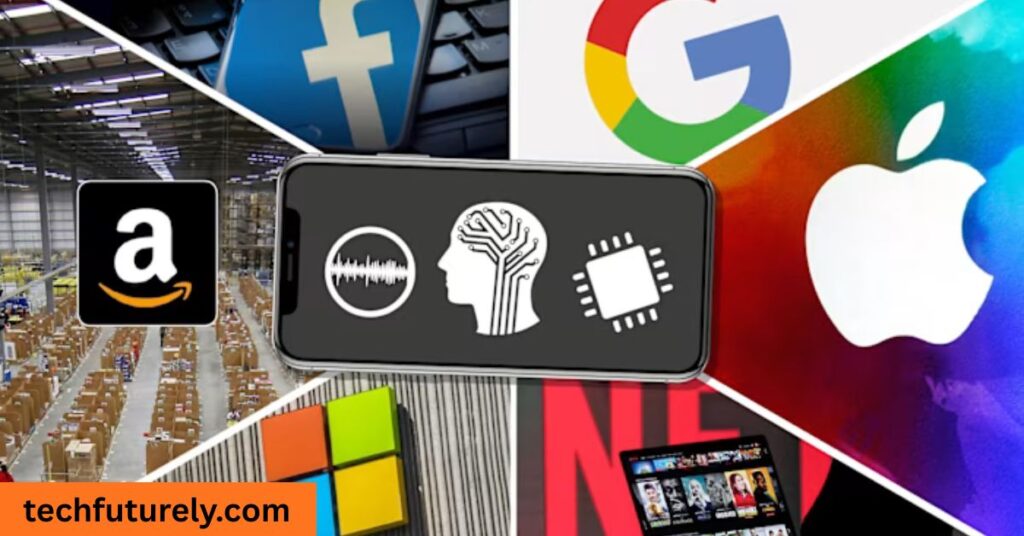
Every big tech firm has its own approach:
Meta (Facebook)
Meta has committed heavily to AR/VR. In 2025, it launched new Ray-Ban smart glasses with a built-in display and a gesture-controlled wristband, priced around $799. CEO Mark Zuckerberg calls these glasses the “ideal form factor” for giving you a personal AI assistant that boosts your memory and senses. Meta’s strategy is to make glasses stylish and social, so people feel comfortable wearing them. They already have the Quest VR headsets for immersive gaming and work; now they hope to use glasses to bring augmented info into everyday life.
Apple
Apple’s famous for taking its time to perfect devices. It released the Vision Pro headset (in early 2024) as a premium spatial computer, demonstrating its long-term interest in AR. More recently, reports say Apple has paused a planned upgrade to Vision Pro so that engineers can focus on wearable glasses. Bloomberg cites people familiar with Apple’s plans: the company aims to start shipping its own AI-enhanced smart glasses by late 2026. These glasses are expected to rely on voice and on-device AI (like the revamped Siri) to deliver information. In short, Apple is laying a foundation with Vision Pro, but its sights are on elegant glasses that tie into the iPhone and Macs as hubs.
Google (Alphabet)
Google is pushing AR wearables via partnerships. In late 2025, Google announced a collaboration with eyeglass seller Warby Parker (and also working with Samsung and fashion brand Gentle Monster) to release “lightweight AI glasses” after 2025. The idea is two devices: one type (AI glasses) has speakers and cameras for hands-free voice interaction with Google’s Gemini AI, and another (Display glasses) has an in-lens screen for info like navigation or translations. Google’s platform (Android XR) and its Gemini AI model will run these glasses. This multi-partner strategy shows Google betting on style and AI to make smart eyewear mainstream.
Microsoft
Microsoft has taken a business-first tack. Its HoloLens headsets (used by engineers and the military) overlay holographic apps in real space. While consumer AR is quiet, Microsoft sees the new wave in enterprise: mixed reality headsets for training, design, and remote work. The company also embeds AI (like Copilot) into Windows and Office. According to insiders, Microsoft might also be developing more affordable mixed-reality hardware down the line. In any case, its focus is productivity: “Mixed reality and AI improve training, collaboration, and productivity before [they go to] consumers,” says an internal view.
Amazon and Others
Amazon, another giant, has dipped its toes with products like the Echo Frames (glasses with Alexa built-in). Its strength is voice AI (Alexa) and smart home devices. While Amazon isn’t leading the AR headset race, its ecosystem of smart speakers, camera doorbells and AI assistants fits the trend of computing happening around you. Other players (like Samsung, Sony, and startups) are also exploring foldable phones, IoT devices, and voice interfaces. Even AI firms like OpenAI envision an “ambient” future where chatbots continuously help us in the background.
What It Means for You and Developers

For everyday users: The shift beyond phones should feel liberating. You’ll likely check your device less often, because small tasks will happen via voice or a glance. For instance, you might ask your glasses, “What time’s my next meeting?” instead of unlocking a phone. AI assistants will personalize help: sending updates, setting reminders, or adjusting your environment before you even think of it.
However, this always-on style raises privacy questions. Wearable tech and ambient sensors gather context (where you are, what you’re doing). Companies will have to build in transparency and encryption so you trust these helpers with your data. Ideally, most processing will happen on-device or on secure cloud services, giving you control over your information.
For developers and businesses: Building for this future means rethinking how apps work. Instead of tiny phone screens, think “user intent”. What job does the user want done? Design products that can achieve goals via voice, vision, or gesture – not just taps. For example, rather than a fixed user interface, imagine an app that listens to what you say and uses sensors (camera, mic, movement) to act.
You will also need to support multimodal interaction: apps must understand a command regardless of whether it’s spoken, typed, or even a look or hand wave. In practice, that means integrating speech recognition, computer vision, and gesture control in concert.
Finally, privacy by design is crucial. Build features that process sensitive data locally when possible, and give clear settings for users. Early adopters of these principles will stand out. According to one view, firms that prepare now for “AI-first, privacy-centric” products will gain a big advantage as the shift accelerates.
Timeline and Outlook
We’re already seeing early signs of change. Here’s a rough timeline that analysts and insiders expect:
| Years | Key Developments |
|---|---|
| 2025–2027 | Many smart glasses and mixed-reality headsets launch or improve. For example, Meta’s Ray-Ban smart display glasses hit stores in 2025. Analysts forecast rapid growth in XR (extended reality) platforms and AI assistants during this period. |
| 2026 | Google and Warby Parker plan to introduce AI-powered glasses. Apple aims to start shipping its own AR smart glasses by late 2026. Prototypes for both are already in testing. |
| 2028–2032 | Wearable tech becomes sleeker and more comfortable. Battery life, processing power, and connectivity improve. Augmented reality and voice assistants see wider adoption for everyday tasks. |
| 2033+ | Smartphones are still around but play a secondary role. The primary interface shifts to AI agents, AR eyewear, and ambient systems. In fact, one forecast estimates the combined AR/VR market could reach $400+ billion by the early 2030s. |
Conclusion
Tech Giants Envision Future Beyond Smartphones as a reality fueled by AI, AR, and ubiquitous computing. They recognize that people want tech to blend in to life, not constantly interrupt it. This isn’t about killing the smartphone overnight. Instead, your phone will evolve from the star player to a backstage conductor: a central hub and backup for complex tasks, while voice, vision, and wearable devices take on routine chores.
The result? A world where checking information or controlling your environment is more natural – like talking to a helpful assistant or glancing at your glasses instead of tapping through apps. As one analysis puts it, computing will become “quieter, more contextual, and more human-centered”. For tech giants, that human-centered vision is the new frontier. And for users and businesses, it means adapting early to an AI-driven, screenless way of life.
