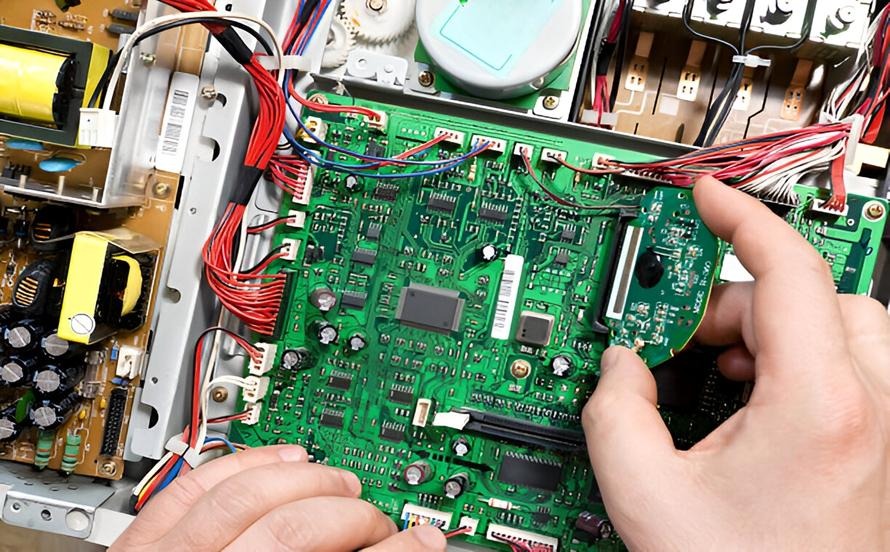
In today’s fast-paced electronics industry, product innovation cycles are shorter than ever. From consumer electronics to automotive control systems and industrial automation, manufacturers rely on efficient and precise assembly technologies to bring their designs to life. One of the most critical processes in modern electronics production is SMT Assembly Service.
Surface Mount Technology (SMT) has transformed how printed circuit boards are manufactured, enabling higher component density, faster production speeds, and improved electrical performance. For global businesses seeking cost efficiency and scalability, PCB Assembly in China has become a preferred solution. In this article, we will explore what SMT assembly is, its advantages, the complete process, and why choosing a reliable manufacturing partner in China can provide a competitive edge.
What Is SMT Assembly Service?
SMT Assembly Service refers to the process of mounting electronic components directly onto the surface of a printed circuit board (PCB). Unlike traditional through-hole technology, which requires components to be inserted into drilled holes, SMT components are placed and soldered onto pads on the board’s surface.
This method allows for smaller components, tighter spacing, and automated placement, resulting in highly efficient production. Today, SMT is widely used in products such as smartphones, medical devices, industrial controllers, automotive electronics, and telecommunications equipment.
A professional SMT assembly service provider handles everything from stencil printing and component placement to reflow soldering and inspection, ensuring high accuracy and reliability throughout the process.
Key Advantages of SMT Assembly Service
SMT technology offers several important advantages that make it the industry standard for modern electronics manufacturing.
First, it enables high component density. Designers can place more components in a smaller area, making compact and lightweight electronic devices possible. This is especially important in wearable technology, IoT devices, and portable electronics.
Second, SMT supports automation. High-speed pick-and-place machines can mount thousands of components per hour with extreme precision. This reduces human error and increases production efficiency.
Third, SMT improves electrical performance. Shorter lead lengths minimize signal delay and inductance, which is crucial for high-speed and high-frequency applications.
Finally, SMT Assembly Service reduces overall production costs. With automated processes and fewer drilling requirements compared to through-hole assembly, manufacturers benefit from lower labor and material expenses.
The Complete SMT Assembly Process
Understanding the SMT process helps businesses evaluate the quality and capabilities of a service provider.
The process begins with solder paste printing. A stainless-steel stencil is aligned over the PCB, and solder paste is applied to the pads. This paste contains flux and tiny solder particles that will later form electrical connections.
Next comes component placement. Automated pick-and-place machines accurately position surface-mount components onto the solder paste. These machines are guided by precise programming and optical alignment systems to ensure correct orientation and placement.
After placement, the board moves through a reflow oven. The solder paste melts under controlled temperature profiles, creating strong and reliable solder joints.
Inspection follows reflow soldering. Advanced manufacturers use Automated Optical Inspection (AOI) and X-ray inspection systems to detect defects such as misalignment, insufficient solder, or hidden solder joint issues.
If required, additional processes such as selective soldering for mixed-technology boards and functional testing are performed before final assembly and packaging.
Why Choose PCB Assembly in China?
Over the past two decades, China has become a global hub for electronics manufacturing. Companies worldwide rely on PCB Assembly in China due to its advanced infrastructure, experienced workforce, and competitive pricing.
One of the main advantages is cost efficiency. Large-scale production facilities, streamlined supply chains, and access to component distributors reduce overall manufacturing expenses.
Another important factor is technological capability. Leading Chinese manufacturers invest heavily in high-speed SMT lines, automated inspection equipment, and strict quality control systems. This allows them to handle everything from prototypes to high-volume mass production with consistent quality.
Additionally, China’s electronics ecosystem provides easy access to components. Proximity to major semiconductor suppliers and electronic markets shortens lead times and improves procurement efficiency.
For startups and established brands alike, working with a reliable Chinese SMT assembly service provider can significantly improve time-to-market and cost competitiveness.
Quality Control in SMT Assembly Service
Quality assurance is a critical aspect of any SMT Assembly Service. Even minor defects in solder joints or component placement can lead to product failure.
Professional manufacturers implement strict quality management systems aligned with international standards such as ISO 9001 and IPC guidelines. Incoming material inspection ensures components meet specifications before assembly begins.
During production, solder paste inspection (SPI) verifies correct paste volume and alignment. After reflow, AOI systems scan each board to detect defects. X-ray inspection is used for complex components like BGAs, where solder joints are hidden beneath the package.
Functional testing and in-circuit testing further confirm that the assembled board operates according to design requirements. These multilayered inspection processes ensure reliability and long-term performance.
Applications of SMT Assembly Service
SMT Assembly Service is used across multiple industries due to its versatility and precision.
In consumer electronics, it enables compact and high-performance devices such as smartphones, tablets, and smart home systems.
In automotive electronics, SMT supports advanced driver-assistance systems (ADAS), engine control units, and infotainment systems that require high reliability under harsh conditions.
In medical electronics, precision SMT assembly ensures stable performance for diagnostic equipment, monitoring devices, and wearable health technology.
Industrial automation and telecommunications equipment also rely heavily on SMT technology for robust and efficient electronic systems.
How to Select the Right SMT Assembly Partner
Choosing the right SMT Assembly Service provider is essential for product success.
First, evaluate manufacturing capability. A reliable partner should have multiple SMT lines, advanced inspection equipment, and the ability to handle different board complexities.
Second, consider experience and technical expertise. A manufacturer with a strong engineering team can assist with design for manufacturability (DFM), helping reduce potential assembly issues before production begins.
Third, review quality certifications and compliance standards. International certifications demonstrate a commitment to consistent quality management.
Finally, assess communication and project management. Clear communication, transparent pricing, and efficient logistics are especially important when working with PCB Assembly in China to ensure smooth collaboration across different time zones.
The Future of SMT Assembly Service
As electronics continue to evolve, SMT technology is advancing as well. Miniaturization trends demand even smaller components and higher placement accuracy. High-speed communication systems require precise impedance control and advanced assembly techniques.
Automation, artificial intelligence, and smart manufacturing systems are increasingly integrated into SMT production lines. These technologies improve defect detection, optimize production parameters, and enhance overall efficiency.
Manufacturers offering PCB Assembly in China are rapidly adopting Industry 4.0 solutions to stay competitive and deliver higher quality at lower costs.
Conclusion
SMT Assembly Service plays a vital role in modern electronics manufacturing. By enabling high-density designs, automated production, and reliable solder connections, SMT has become the backbone of PCB assembly.
For companies seeking cost-effective and scalable solutions, PCB Assembly in China offers a powerful combination of advanced technology, efficient supply chains, and competitive pricing.
Choosing an experienced and quality-focused partner ensures that your electronic products meet performance standards while reducing time-to-market. Whether you are developing a prototype or launching mass production, partnering with a trusted provider of SMT Assembly Service can help transform your design into a reliable and successful product.
