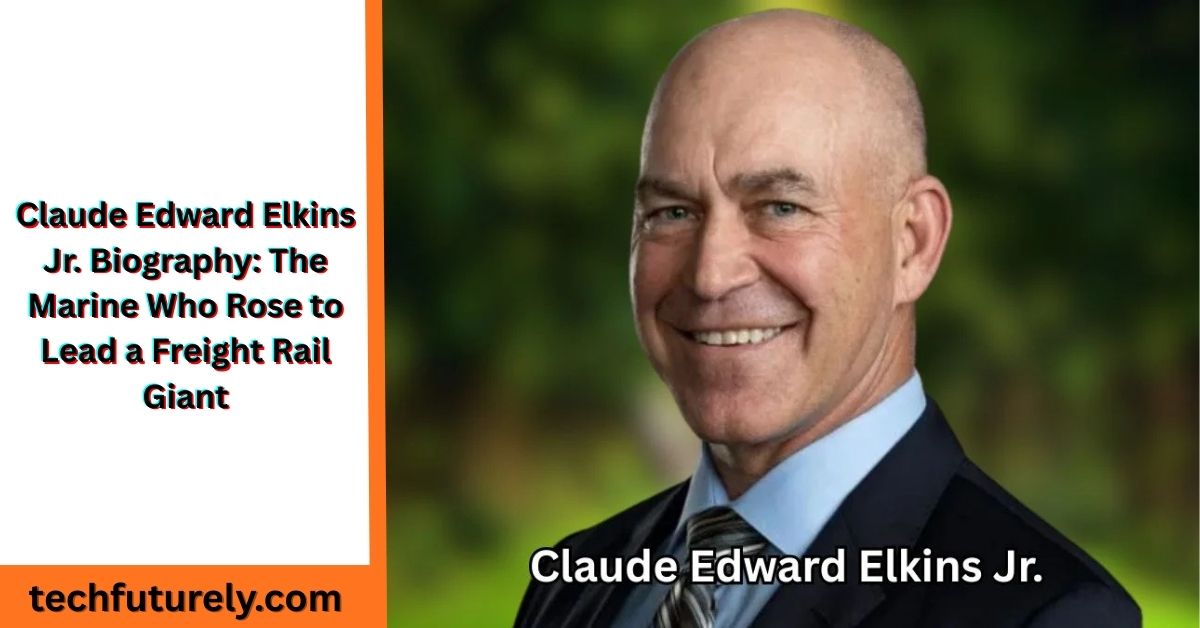
When Claude Edward Elkins Jr. stepped aboard a Norfolk Southern train in 1988, he had no inkling he would one day help drive a $9 billion freight railroad. A former Marine Corps member, Elkins began his career on the ground level – first as a brakeman – before steadily climbing to the executive suite. Today, as Executive Vice President and Chief Commercial Officer of Norfolk Southern, he oversees everything from intermodal trains to automotive traffic networks. His story – a literal career track from engine cab to corporate office – offers a vivid example of how deep operational know-how and strategic vision can transform a company. In this article, we’ll explore Ed Elkins’s roots, rise, and the impact he’s making on modern railroading and logistics.
| Quick Facts | |
|---|---|
| Full Name: | Claude Edward Elkins Jr. |
| Current Title: | EVP & Chief Commercial Officer, Norfolk Southern Corporation |
| Industry: | Freight Rail & Transportation |
| Joined Norfolk Southern: | 1988 (as Road Brakeman) |
| Education: | BA English (UVA Wise); MBA, Port & Maritime Econ. (Old Dominion) |
| Military Service: | United States Marine Corps |
| Hometown: | Southwest Virginia |
Early Life and Foundations
Hometown and Background
Born and raised in rural Southwest Virginia, Elkins grew up in the heart of America’s coal country – a region long intertwined with railroads. Like many rail workers of his generation, he gained a tough, hands-on mindset early on. After high school, Elkins served in the U.S. Marine Corps, an experience that instilled discipline, teamwork, and leadership skills. These traits would later prove invaluable in managing complex rail networks and corporate teams.
Education
Following his military service, Elkins pursued higher education to complement his field experience. He earned a Bachelor’s degree in English from the University of Virginia’s College at Wise, and later an MBA in Port & Maritime Economics from Old Dominion University. His academic focus on maritime economics and logistics directly aligns with managing a large transportation network, enhancing his ability to make data-driven commercial decisions in an industry where cargo flow is king.
Military Service
Elkins’s time in the Marines left a lasting mark. The United States Marine Corps trains its members to adapt quickly and lead under pressure, qualities Elkins brought to Norfolk Southern. The resilience and structured thinking cultivated in the military helped him navigate both the physical demands of railroading and the challenges of corporate leadership.
Starting on the Rails: The Ground-Up Career
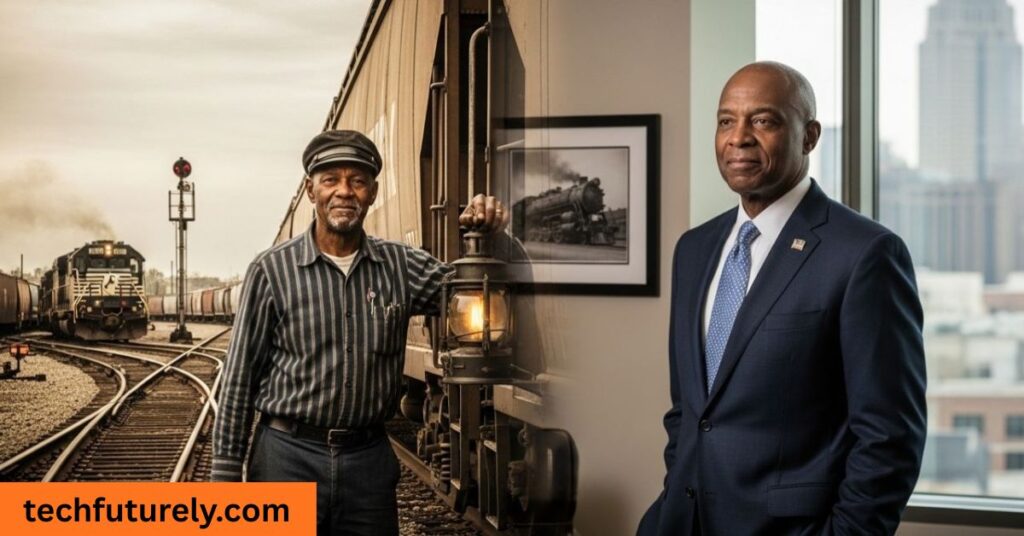
Elkins’s career at Norfolk Southern began in the trenches of train operations. In 1988, he joined the railroad as a Road Brakeman, one of the most physically demanding jobs on the rail (tracking cars, coupling trains, and maintaining safety). Over the next several years, he took on every key operating role:
- Conductor: Coordinated train crews and managed day-to-day train movements.
- Locomotive Engineer: Became certified to drive engines on mainline trains.
- Relief Yardmaster: Oversaw rail yard operations, ensuring cars were routed correctly.
These roles placed him right in the thick of rail network operations, giving him firsthand insight into everything from switch mechanics to emergency response. By working in the yards and on the tracks, Elkins developed a practical understanding of what makes or breaks service quality – a foundation that would later inform his commercial strategy.
Transition into Commercial Leadership
Move Into Intermodal Marketing
After proving himself in operations, Elkins shifted to the commercial side of railroading. For roughly 20 years, he worked in intermodal marketing – the business of moving shipping containers by rail, truck, and ship. Intermodal is fiercely competitive (it competes directly with long-haul trucking) and highly customer-driven. In this realm, Elkins learned how to align customer needs with what the rail network could reliably deliver. Success meant balancing pricing, transit times, and capacity. His long tenure in intermodal indicates that he consistently met those challenges, building a reputation for driving service improvements without overpromising.
Senior Vice President Roles
Elkins’s leadership in intermodal marketing led to broader responsibilities in other freight sectors. Key milestones include:
- 2016: Appointed Group Vice President of Chemicals Marketing. Here, he managed the transportation of hazardous materials – a segment demanding strict safety protocols and regulatory compliance.
- 2018: Promoted to Vice President of Industrial Products. This division covers bulk freight like metals, paper, and construction materials, which tie closely to national manufacturing cycles.
Managing these diverse divisions expanded Elkins’s strategic breadth. He learned to handle everything from laboratory-safe chemical shipping to coordinating just-in-time deliveries for automakers. Excelling in both areas showcased his adaptability and set the stage for enterprise-wide leadership.
Executive Leadership: EVP & Chief Commercial Officer
In December 2021, after 33 years on the railroad, Claude Edward Elkins Jr. was promoted to Executive Vice President and Chief Commercial Officer (CCO). In this C-suite role, he became responsible for all of Norfolk Southern’s revenue-generating activities. His core responsibilities include:
- Managing Key Business Divisions: He oversees the company’s Intermodal, Automotive, and Industrial Products divisions, which form the bulk of Norfolk Southern’s freight volumes.
- Coordinating Support Groups: Under his umbrella fall Real Estate, Industrial Development, Short Line Marketing, Field Sales, and Customer Logistics teams.
- Strategic Pricing & Service: He sets commercial strategy, balancing competitive rates with guaranteed service levels so that customers trust the railroad’s capacity.
- Customer Engagement: Working directly with top shippers, he ensures Norfolk Southern’s offerings align with industry needs and emerging trends.
Because rail sales and operations are intertwined, Elkins’s promotion meant “putting someone with boots-on-the-ground experience in charge of sales strategy.” With his background, he evaluates growth opportunities through a practical lens, ensuring the railroad doesn’t overextend its capacity.
Leadership Style and Influence
Blend of Experience and Strategy
Elkins stands out for blending floor-level insight with executive vision. His career path – from brakeman to boardroom – gives him credibility with engineers and executives alike. Rather than making decisions from an ivory tower, he often references the realities of the rail yard. For example, Elkins has repeatedly emphasized safety and reliability as a foundation. At the 2025 North American Rail Shippers meeting, he highlighted how Norfolk Southern reduced mainline accidents by 40%, crediting careful planning and new technology. He’s known for phrases like “safe, fast, and resilient network,” signaling that practical improvements on the ground (like AI-powered track inspections) are as important as big-picture goals.
Approach to Strategy
Under Elkins’s guidance, Norfolk Southern’s strategy skews customer-focused and innovation-driven. He often speaks about listening to shippers: in late 2024 he launched a Customer Advisory Board and said, “Our commitment to being a trusted transportation partner for our customers drives everything we do.” This quote shows how he ties everyday operations to customer outcomes. In practice, that means introducing tools to make rail shipping easier—such as real-time shipment tracking or clear ETA notifications. Elkins also champions modern technologies: the railroad is using AI and data analytics to predict equipment issues before they cause delays, helping crews “turn finders into fixers” in maintenance. The result is a strategy that aims to grow market share by improving service rather than by cutting costs at the expense of reliability.
Industry and Community Engagement
Industry Boards & Associations
Outside his formal duties, Elkins is deeply embedded in the broader business community. He serves on several high-profile boards and councils, reflecting his commitment to industry collaboration. Notably, he is Vice Chair of the Georgia Chamber of Commerce and sits on the boards of the National Association of Manufacturers and TTX Company. He’s also involved with rail industry groups like the East Lake Foundation (focused on urban revitalization) and professional associations for marketing executives. These roles keep him connected to both economic development and logistics best practices, enabling him to bring outside insights back to the railroad.
Community Involvement
Elkins doesn’t just focus on big business – he also champions local communities. For example, he represents Norfolk Southern in organizations like the Traffic Clubs of Chicago, New York, and Pittsburgh. These clubs promote safe and efficient transportation practices. Back in Atlanta, he’s active with the Georgia State University Marketing Roundtable. Through these and other civic engagements, Elkins works to improve community relations and workforce development. By attending charity events or sponsoring technical training, he helps the railroad maintain a social license to operate, reinforcing the idea that the railroad is part of the community’s fabric.
Strategic Priorities Under His Leadership
Customer-Focused Growth
Elkins’s top priority is growth driven by customer needs. He understands that long-term revenue comes from making shippers successful. To that end, he’s streamlined Norfolk Southern’s service offerings. Initiatives range from launching a Customer Advisory Board (to gather direct feedback from top clients) to improving on-time performance metrics. In public forums, Elkins often notes that shipping by rail already delivers huge advantages — for instance, “Norfolk Southern helps its customers avoid approximately 15 million tons of yearly carbon emissions” by using energy-efficient trains. He leverages such facts in sales discussions, framing rail transport as both economical and environmentally friendly. Under his watch, the company has also pursued industrial growth projects: in 2024 NS supported over 140 new plant developments (worth $4.3 billion in private investment) to generate new rail traffic. These efforts show how he aligns company priorities – like expanding network usage – with the practical needs of customers and communities.
Sustainability & Innovation
Sustainability is a strategic priority that runs through Elkins’s leadership narrative. The railroad’s efficiency advantage (moving freight by rail instead of truck) is a key selling point. He often highlights Norfolk Southern’s reduced carbon impact to appeal to eco-conscious shippers. At the same time, Elkins pushes technological innovation to make the railroad even greener and more efficient. Under his commercial oversight, NS is investing in innovations like precision scheduling and fuel-saving locomotives. For example, the use of AI-powered inspections not only boosts safety, but also helps reduce unplanned stops (saving fuel and time). In essence, he ties sustainability directly to business value: by proving rail’s environmental benefits, he encourages customers to move more freight by train, benefiting NS’s long-term growth.
Challenges and Industry Context
The freight rail industry has faced significant challenges during Elkins’s tenure. Economic fluctuations and competitive pressures from trucking mean Norfolk Southern must deliver consistently high service. The company also navigated an intense period of scrutiny after a high-profile train derailment in early 2023 (not directly Elkins’s domain, but affecting corporate reputation). In response, the focus on safety that Elkins emphasizes became even more critical. He notes improvements like a 40% drop in mainline accidents as indicators that the company is regaining public trust. Additionally, labor shortages and supply chain disruptions pose ongoing hurdles. To address these, Elkins’s strategy stresses reliability over short-term volume. By refusing to overbook trains and by investing in crew training and technology, he aims to build a network that can adapt to demand swings. Ultimately, these industry headwinds have reinforced the importance of his pragmatic approach – balancing aggressive growth goals with the realities of rail operations.
Legacy and Impact of Claude Edward Elkins Jr.
Ed Elkins’s legacy is still unfolding, but certain impacts are already clear. He embodies a hands-on leadership style that values both employee experience and customer success. Many in the industry view his career as inspirational – proof that dedication and adaptability can propel someone from the shop floor to the boardroom. Under his guidance, Norfolk Southern has sharpened its commercial strategy and made measurable gains in performance. Even his colleagues describe him as a stabilizing force who bridges different parts of the company. Looking ahead, his influence will likely be seen in how NS continues to grow intermodal and automotive businesses, and in how it embraces new technologies. For workers who once worked alongside him on the yard, Elkins’s rise serves as a reminder: the railroad offers endless tracks of opportunity for those who learn the ropes and lead with integrity.
Quick Facts
- Started at Norfolk Southern (1988): Began as a Road Brakeman, then served as Conductor, Locomotive Engineer, and Yardmaster.
- Maritime and Logistics Expertise: After shifting to marketing, he spent 20 years in intermodal logistics, plus leadership in chemicals and industrial freight.
- Current Role (since 2021): EVP & Chief Commercial Officer, overseeing key divisions (Intermodal, Automotive, Industrial Products) and customer sales.
- Military Background: Served in the U.S. Marine Corps, which instilled discipline that he credits with helping his railroad career.
- Education: B.A. in English from UVA’s College at Wise; MBA in Port & Maritime Economics from Old Dominion University.
- Board Memberships: Vice Chair of the Georgia Chamber of Commerce; on the boards of the East Lake Foundation, National Association of Manufacturers, TTX, and industry associations.
- Sustainability Champion: Promotes rail’s eco-benefits – NS helps shippers avoid ~15 million tons of CO₂ emissions annually by using trains.
- Industry Recognition: Known for high standards on safety and customer service; under his watch, NS introduced Customer Advisory Boards and advanced train inspection technologies.
Conclusion
Claude Edward Elkins Jr.’s career is a testament to the power of experience and perseverance. From a brakeman hauling rail cars to the executive who charts a railroad’s future, his journey reflects the depth of knowledge needed in modern rail leadership. By leveraging his hands-on background, Elkins has steered Norfolk Southern toward customer-focused growth, safety improvements, and sustainable innovation. His story shows that in the world of railroading, understanding the tracks beneath your feet – literally – can lead to guiding the company as a whole. As Norfolk Southern moves freight into the future, Elkins’s blend of practical wisdom and strategic thinking will likely leave a lasting imprint on the industry.
