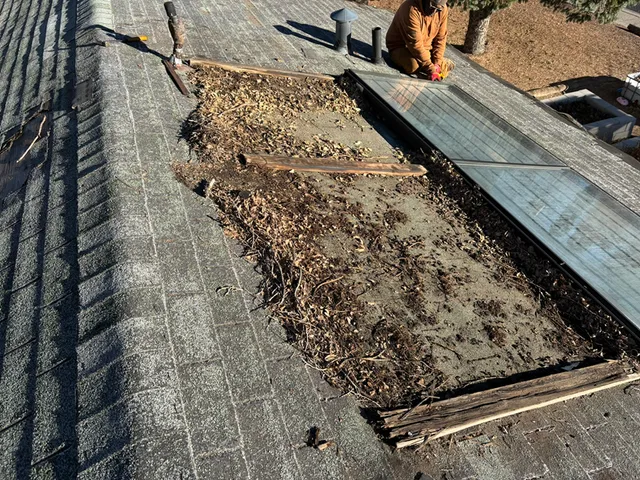
Living through a major storm is a stressful experience for any homeowner. Once the wind dies down and the rain stops, your first instinct is probably to check the yard for downed branches or scattered shingles. If you live in a high-wind area, you might already be thinking about the necessity of roof repair eagle mountain services to get things back to normal. However, the debris left behind by a storm is more than just a messy eyesore on your lawn. It can actually be the silent catalyst for long-term structural failure if you do not handle it quickly.
The Hidden Danger of Fallen Branches
When a heavy limb breaks off a tree and lands on your house, the damage is usually obvious. You can see the cracked tiles or the dented metal. But the smaller branches that just sit there are actually quite sneaky. Even if they do not punch a hole through the wood, they have weight. Over several days, that constant pressure can cause shingles to compress or lose their granules.
Granules are those little sand-like pebbles on your asphalt shingles. They are not just there for decoration. They protect the underlying bitumen from UV rays. When a branch scrapes across the surface during a wind gust, it acts like sandpaper. It strips away that protective layer and leaves your roof vulnerable to the sun. Once the sun starts baking those exposed spots, the shingle becomes brittle and will eventually crack during the next temperature shift.
Clogged Gutters and Water Backups
Storms do not just drop big branches. They also pelt your home with leaves, pine needles, and small twigs. These items inevitably wash down into your gutter system. If your gutters get choked up with organic matter, the water has nowhere to go. During the next downpour, that water will back up under the edge of your roofline.
This is where the real trouble starts. Your roof is designed to shed water downward. It is not built to withstand water being pushed upward under the shingles. When water sits against the fascia board or the roof deck, it creates a perfect environment for rot. You might not see a leak inside your attic for months, but the wood is slowly softening. By the time a brown stain appears on your ceiling, you are likely looking at a much larger renovation project than a simple patch job.
Airborne Debris and Impact Damage
Sometimes the debris that ruins a roof is not even from your own property. High winds can pick up lawn furniture, shingles from a neighbor’s shed, or even loose gravel. These items become projectiles. While a single impact might just look like a small scuff, it can actually break the fiberglass mat inside an asphalt shingle.
This is what professionals call a bruise. It looks like a dark spot where the granules have been pushed into the mat. From the ground, it looks like nothing. Up close, it is a structural failure. That tiny bruise will eventually turn into a hole as the seasons change and the material expands and contracts. If you ignore these small impact points, you are essentially waiting for a leak to happen.
The Problem with Organic Decay
If you leave piles of leaves or pine needles on your roof after a storm, they start to decompose. As organic matter breaks down, it holds onto moisture like a sponge. This creates a damp and shaded environment that is a playground for mold, mildew, and moss.
Moss is particularly dangerous because its roots can actually lift shingles up. Once a shingle is lifted, it loses its seal. A lifted shingle is easily caught by the next gust of wind and ripped off entirely. Plus, the acidic nature of decaying leaves can eat away at the oils in your roofing material. This causes the shingles to age prematurely and lose their flexibility. Keeping a clean roof is about more than just curb appeal. It is about preventing a biological attack on your home’s primary defense system.
Final Word: Don’t Wait for a Leak
It is tempting to look up from the driveway and assume everything is fine because you do not see a gaping hole. But roofing professionals know that the worst damage is often the kind you cannot see without a ladder. Taking the time to clear off debris and inspect your flashing after a storm can save you thousands of dollars in the long run. If you suspect that your home took a beating during the last big blow, it is always a good idea to call for a professional roof repair eagle mountain inspection. Catching a small bruise or a clogged valley early on ensures that your home stays dry and your equity stays protected for years to come.
