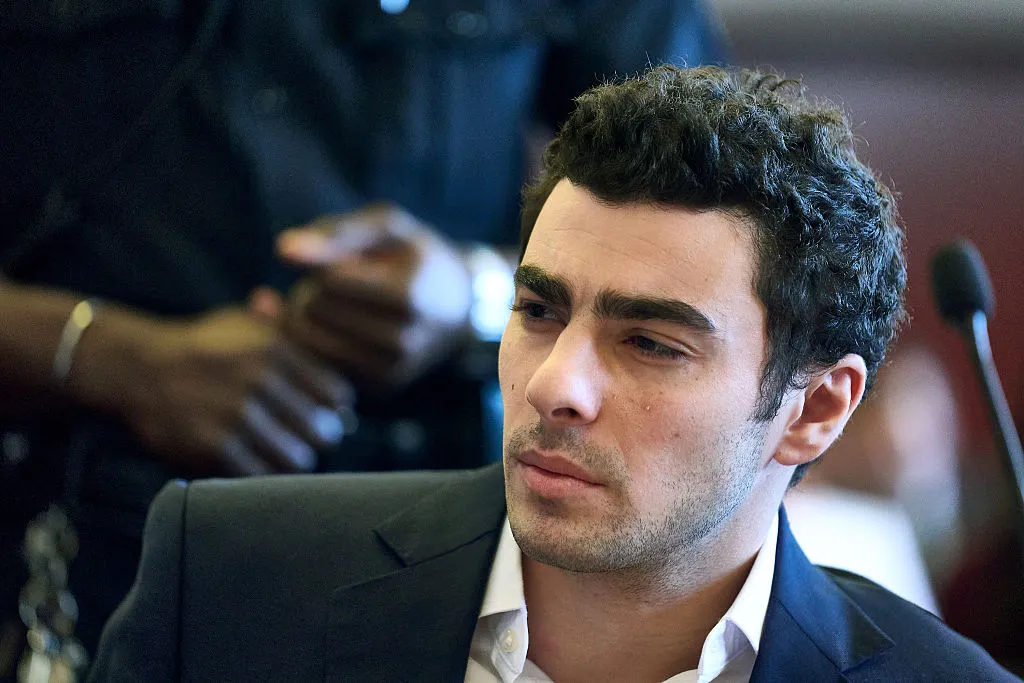
On the morning of December 4, 2024, a single act of alleged violence set off a chain reaction that the United States is still reckoning with today. Luigi Mangione — a 26-year-old Ivy League graduate from a wealthy Baltimore family — became the subject of a nationwide manhunt after UnitedHealthcare CEO Brian Thompson was shot and killed outside a Midtown Manhattan hotel. The name Luigi Mangione quickly spread across every major news platform, social media feed, and dinner table conversation in America. But what makes this case so persistently compelling isn’t just the crime itself. It’s the staggeringly complicated web of biography, ideology, public response, legal complexity, and social critique that has woven itself around the man at its center. This article explores all of it — factually, carefully, and completely.
Who Is Luigi Mangione? A Biographical Overview
Early Life, Family, and Education
Luigi Nicholas Mangione was born on May 6, 1998, in Towson, Maryland, into one of Baltimore’s most prominent Italian-American families. His paternal grandfather, Nicholas Mangione Sr., was a successful real estate developer who built a family empire with ten children and 37 grandchildren. The family’s financial and social footprint in Baltimore is substantial — they own the Turf Valley Resort in Ellicott City and the Hayfields Country Club in Hunt Valley, and the Mangione Family Foundation has donated over a million dollars to the Greater Baltimore Medical Center alone. By every external measure, Luigi Mangione grew up in an environment of privilege, opportunity, and community standing.
He attended the Gilman School, an elite all-boys private academy in Baltimore, where he was a standout student and athlete, participating in wrestling, cross country, soccer, and track. His classmates remembered him as intellectually curious, socially well-liked, and deeply interested in mathematics and computer science. In 2016, Mangione graduated as the valedictorian of his class — a distinction that signals not just academic excellence but a certain kind of discipline and dedication that defined his early years.
From Gilman, Mangione went on to the University of Pennsylvania, where he earned both a bachelor’s and a master’s degree in computer science by 2020. While there, he founded UPGRADE, the university’s first game development club, which grew to roughly 60 members and connected programmers, artists, and designers around a shared passion for video games. He also completed a robotics research internship at Johns Hopkins University and worked as a UI programming intern at Firaxis Games, contributing to the acclaimed strategy title Civilization VI. The picture that emerges from these years is of a young man who was genuinely talented, socially engaged, and professionally promising.
Biographical Snapshot: Luigi Mangione at a Glance
| Category | Details |
|---|---|
| Full Name | Luigi Nicholas Mangione |
| Date of Birth | May 6, 1998 |
| Place of Birth | Towson, Maryland, USA |
| Family Background | Wealthy Italian-American; Baltimore real estate dynasty |
| High School | The Gilman School, Baltimore (Valedictorian, 2016) |
| University | University of Pennsylvania (B.S. + M.S.E., Computer Science, 2020) |
| Previous Employment | TrueCar (software engineer), Stanford Pre-Collegiate Studies |
| Notable Co-founding | AppRoar Studios (iOS games); UPGRADE Club at UPenn |
| Legal Status | Accused; pleaded not guilty to all charges |
| Current Status | Awaiting trial — state trial set for September 2026; federal trial January 2027 |
Life After Graduation: A Turn Inward
After leaving TrueCar, a car retail platform where he worked as a software engineer until 2023, Mangione’s life took a quieter, more introspective turn. He moved to Hawaii, living in a co-living space in Honolulu. Friends and housemates from that period described him as warm, helpful, and community-minded. R.J. Martin, who founded the co-living space, later recalled that Mangione was someone who consistently left “everyone and everything better than he found them.” But cracks were forming beneath the surface.
During his time in Hawaii, Mangione reportedly suffered a serious back injury following a surf lesson and subsequently underwent spinal surgery. Those close to him described a change in his demeanor after the procedure — a growing withdrawal from social contact, a deepening frustration with the healthcare system that treated his condition, and an increasing radicalization in his online reading and commentary. By early 2024, he had posted a review on Goodreads praising the manifesto of Ted Kaczynski, the so-called “Unabomber,” describing it as “prescient.” Shortly before Thanksgiving 2024, his mother filed a missing persons report in San Francisco, unable to reach him. The next time his name appeared in the news, it would be in an entirely different context.
The Shooting of Brian Thompson and the Nationwide Manhunt
On the morning of December 4, 2024, UnitedHealthcare CEO Brian Thompson, 50, was shot and killed outside a Hilton hotel in Midtown Manhattan as he arrived for the company’s annual investor conference. Surveillance footage captured a masked gunman approaching Thompson from behind, firing multiple shots, and then escaping on an e-bike through Central Park. Law enforcement later revealed that the words “delay,” “deny,” and “depose” — a phrase used by critics to describe insurance claim denial tactics — were etched on the ammunition recovered from the scene.
The resulting manhunt was one of the most intensive in recent New York City history. Five days after the shooting, on December 9, 2024, a McDonald’s employee in Altoona, Pennsylvania — roughly 230 miles from Manhattan — recognized a customer from news coverage and called 911. That customer was Luigi Mangione. When police arrived, they found him seated at a table with a laptop, wearing a blue medical mask. He initially provided a false ID under the name “Mark Rosario.” Officers discovered a firearm matching the one used in the shooting, a silencer, forged identification documents, and a handwritten note criticizing the American healthcare industry for prioritizing profits over patient care.
Mangione was arrested and later extradited to New York. He was indicted on eleven state charges and four federal charges, including first-degree murder in furtherance of terrorism, criminal possession of a weapon, stalking, and forgery. He pleaded not guilty to all counts.
The Legal Proceedings: A Complex and Evolving Case
State and Federal Charges: What He Faces
The legal case against Luigi Mangione has evolved significantly since his arrest. In September 2025, a New York state judge dismissed the two terrorism-related murder charges from his state indictment, finding that the evidence did not support a finding of intent to terrorize the public or inspire widespread fear — both required elements under the applicable statutes. Mangione still faces second-degree murder and eight other state charges, with a maximum sentence of 25 years to life if convicted.
On the federal side, the Department of Justice initially sought the death penalty, a decision that drew sharp criticism from Mangione’s defense team, who called it a “publicity stunt.” In January 2026, U.S. District Judge Margaret Garnett dismissed two federal charges — including the murder-through-a-firearm count that carried the death penalty and a related firearms charge — ruling them “legally incompatible” with the two remaining stalking charges. As a result, Luigi Mangione will not face execution if convicted federally, but he still faces the possibility of life in prison without parole.
Timeline of Legal Events
| Date | Event |
|---|---|
| December 4, 2024 | Brian Thompson shot and killed in Midtown Manhattan |
| December 9, 2024 | Luigi Mangione arrested in Altoona, Pennsylvania |
| December 2024 | Indicted on state and federal charges; pleads not guilty |
| September 2025 | State judge dismisses two terrorism-related murder charges |
| December 2025 | Suppression hearings begin in New York state court |
| January 2026 | Federal judge dismisses death-penalty-eligible murder charge |
| April 2026 | State trial delayed to September 2026; federal trial moved to October, then January 2027 |
| May 18, 2026 | Judge expected to rule on suppression of key evidence |
| September 8, 2026 | State trial currently scheduled to begin |
| January 2027 | Federal trial currently scheduled to begin |
The Defense Strategy and Key Legal Battles
Mangione’s legal team — led by prominent defense attorneys Karen Friedman Agnifilo and Marc Agnifilo — has mounted an aggressive and methodical defense. One of their central arguments centers on the alleged improper search of Mangione’s backpack at the time of his arrest, contending that police lacked a proper warrant and that any evidence obtained from it — including the firearm and a handwritten notebook — should be suppressed and excluded from trial. Judge Gregory Carro is expected to rule on that suppression motion on May 18, 2026, and the outcome could significantly reshape the state prosecution.
The defense has also raised double jeopardy concerns, arguing that prosecuting Mangione in both state and federal courts for the same alleged act amounts to unconstitutional dual punishment. At a February 2026 hearing, Mangione addressed the judge directly on this issue, stating that facing two trials for the same conduct was, in his words, “double jeopardy by any commonsense definition.” Courts have generally held that dual sovereignty doctrine permits both state and federal prosecution for the same conduct, but the argument reflects the aggressive legal posture Mangione’s team has adopted throughout.
The scheduling of the two trials has itself become a significant battlefield. With the state trial now set for September 2026 and the federal trial pushed to January 2027, Mangione’s lawyers have argued that preparing for both simultaneously is a constitutional and practical impossibility. The legal fund established to support his defense has raised over $1.4 million through a GiveSendGo crowdfunding campaign, with donors citing frustrations with the healthcare system, concerns about due process, and opposition to the initial death penalty pursuit.
The Cultural and Social Phenomenon Around Luigi Mangione
Perhaps the most striking dimension of the Luigi Mangione case isn’t the legal proceedings at all — it’s the extraordinary cultural response that erupted in the weeks and months following his arrest. Rolling Stone described him as the “most debated and polarizing murder suspect in recent history,” and that characterization understates the sheer complexity of the public’s reaction.
Almost immediately after his arrest, a significant segment of the public — particularly younger Americans — expressed sympathy or outright support for Mangione on social media. The hashtag “#FreeLuigi” and its variants were shared tens of thousands of times. Murals of his likeness appeared in Seattle. A billboard in Riverside County, California, expressed support. His fellow inmates at a Pennsylvania correctional facility were heard chanting “Free Luigi” during a live news broadcast. A musical inspired by his story — titled Luigi: The Musical — sold out its run at the San Francisco Fringe Festival. Online stores briefly listed merchandise featuring his image, including an AI-generated likeness on clothing sold by the fast-fashion platform Shein, which removed the product after it was discovered.
Polls conducted in late 2024 and early 2025 found a pronounced generational divide in how Americans viewed the case. A majority of Americans over 45 held strongly negative views of Mangione. A majority of Americans under 30, by contrast, viewed him favorably — a data point that speaks less to any endorsement of violence and more to the depth of frustration that younger generations feel toward the American healthcare industry.
Public Opinion by Age Group
| Age Group | View of Mangione | Primary Motivation |
|---|---|---|
| Under 30 | Majority favorable | Frustration with healthcare system |
| 30–45 | Mixed / divided | Split between legal and systemic concerns |
| Over 45 | Majority unfavorable | Focus on victim and rule of law |
| Legal community | Largely critical | Due process and precedent concerns |
| Healthcare reform advocates | Nuanced | Separating act from systemic critique |
The Healthcare System at the Center of the Story
It would be impossible to write about Luigi Mangione without addressing the systemic backdrop against which his case has played out. The American health insurance industry has long been a source of public frustration, but the Thompson killing brought specific practices into sharp focus. The phrase carved into the ammunition — “delay, deny, depose” — references a book that documented how insurers systematically delay or deny legitimate claims, often forcing policyholders into legal battles that exhaust their resources and resolve cases for far less than owed.
UnitedHealthcare, as the largest health insurer in the United States, has faced scrutiny over its claim denial practices and the use of AI-based tools to automate coverage decisions. A Gallup poll conducted in early 2026 found that 61% of Americans say they worry “a great deal” about the availability and affordability of healthcare — one of the highest figures on record. That number provides context for the polarized public response to the Mangione case. When tens of millions of people feel genuinely afraid of getting sick because of what it might cost them, the emotional landscape around a case like this becomes extraordinarily complicated.
None of this context, it should be clearly stated, changes the legal and moral weight of what Brian Thompson’s family lost on December 4, 2024. Thompson was a father, a husband, and a person who, by all accounts, was well-regarded by those who knew him personally. The grief his family carries is real and undiminished by any larger conversation about industry practices. The legal system’s job is to evaluate what Luigi Mangione allegedly did on that morning — not to adjudicate the failures of the healthcare industry. Those are separate questions, even when they share a stage.
Conclusion:
The Luigi Mangione case is, at its core, a murder case. A man is dead. A family is grieving. An accused man awaits trial in two separate courts, facing the possibility of life in prison. These facts are not in dispute, and they are the facts that matter most from a legal and human standpoint.
But the case has also become something else — a mirror held up to American society, reflecting back anxieties about healthcare, inequality, corporate power, and the different ways that different generations experience and interpret justice. That reflection doesn’t justify anything. It does, however, demand that we pay attention.
As the state trial approaches in September 2026 and the federal trial looms in January 2027, the courts will work through the evidence, the motions, and the arguments to reach a legal verdict. What the courts cannot resolve is the broader conversation that Luigi Mangione’s case has catalyzed — about what kind of healthcare system Americans deserve, how corporations should be held accountable, and how a society processes collective frustration when institutional channels feel closed. Those questions will outlast this trial by decades.
For readers following this case, the most important thing is to engage with it honestly: understanding the biography, the legal facts, the cultural response, and the systemic context — without reducing any of it to simple narrative. This is a complex story about a real crime, a real victim, a real accused person, and a very real set of national tensions. All of it deserves serious, clear-eyed attention.
