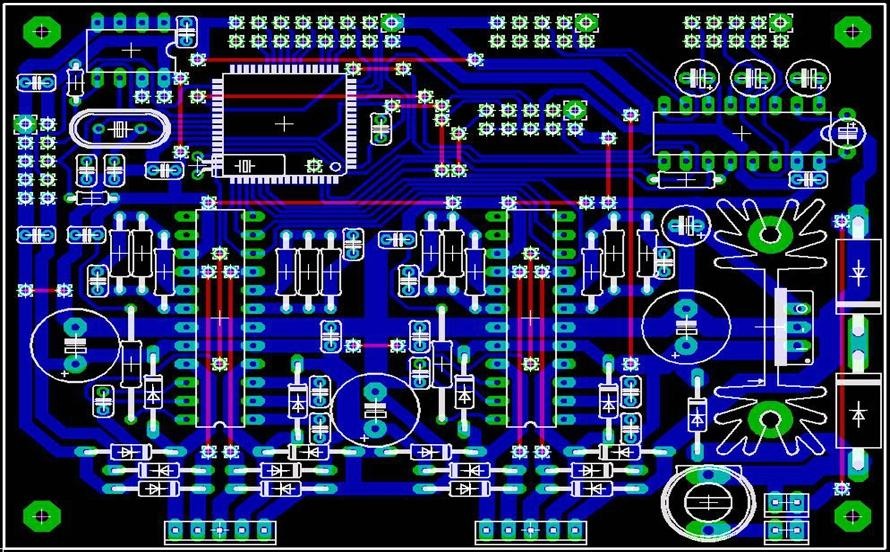
Printed circuit boards are the foundation of almost every electronic device used today. From small household gadgets to large industrial machines, circuit boards connect electronic components and allow devices to function efficiently. Among the different types of PCBs available, the Single-Sided PCB is one of the simplest and most widely used designs. Due to its cost-effectiveness, easy manufacturing process, and reliable performance, it remains a popular choice for many basic electronic applications.
Understanding how single-sided boards work, how they are manufactured, and where they are used can help engineers and manufacturers select the right PCB type for their projects.
What Is a Single-Sided PCB?
A Single-Sided PCB is a printed circuit board that has conductive copper traces on only one side of the board. Electronic components are mounted on one side, while the copper layer that forms the electrical pathways is located on the opposite side.
This design makes the board simple and easy to manufacture compared to more complex PCB types such as double-sided or multilayer boards. Because all circuits are routed on a single copper layer, the layout is straightforward and suitable for circuits that do not require complex routing.
Single-sided boards typically consist of three main layers. The base material, usually fiberglass or a similar substrate, provides mechanical support and insulation. On top of this substrate lies a thin copper layer that forms the conductive pathways. A protective solder mask may also be applied to protect the copper traces and prevent short circuits.
Due to this simple construction, single-sided boards are considered the most basic form of printed circuit boards.
Structure of a Single-Sided PCB
The structure of a Single-Sided PCB is relatively simple but still designed to ensure electrical stability and durability. The board starts with a substrate layer that acts as the base material. In many cases, manufacturers use FR-4 fiberglass, phenolic resin, or other insulating materials that provide mechanical strength.
Above the substrate is the copper layer. This thin copper sheet is etched during the manufacturing process to create conductive pathways that connect various electronic components. Since there is only one copper layer, designers must carefully plan the circuit layout to avoid overlapping connections.
A solder mask layer is usually applied over the copper traces. This protective coating prevents oxidation and protects the circuits from environmental damage. In addition, it helps prevent solder bridges during the assembly process.
Finally, a silkscreen layer may be added to mark component positions, reference numbers, and other important assembly information.
Manufacturing Process of a Single-Sided PCB
The production of a Single-Sided PCB follows a relatively straightforward manufacturing process compared to multilayer boards. The process begins with selecting the base substrate material. A copper foil layer is laminated onto the substrate to create the starting board material.
Next, the circuit design is transferred onto the copper layer using a photoresist process. A light-sensitive material is applied to the copper surface, and the circuit pattern is exposed using ultraviolet light through a photomask.
After exposure, the unprotected copper areas are removed using chemical etching. This process leaves behind only the copper traces that form the electrical circuit.
Once the circuit pattern is completed, a solder mask is applied to protect the copper traces. The board then undergoes drilling to create holes for component leads if required. After drilling, the silkscreen layer is printed to mark component placements.
Finally, the board goes through electrical testing and quality inspection to ensure that the circuit connections function properly.
Benefits of Using Single-Sided PCBs
One of the biggest advantages of a Single-Sided PCB is its cost efficiency. Since the board contains only one conductive layer, the manufacturing process is simpler and requires fewer materials compared to double-sided or multilayer PCBs. This makes single-sided boards ideal for mass production of low-cost electronics.
Another key benefit is the ease of design and assembly. Engineers can quickly design circuits for simple electronic devices without the complexity of multilayer routing. This also reduces the time required for prototyping and manufacturing.
Single-sided boards also offer good reliability for basic circuits. With fewer layers and simpler connections, the risk of internal layer defects or alignment issues is minimized. This makes them suitable for applications where complex circuitry is not required.
Additionally, the repair and inspection process is easier because all traces are located on one side of the board. Technicians can quickly identify faults and replace components when necessary.
Applications of Single-Sided PCBs
Despite their simple design, Single-Sided PCBs are used in a wide range of electronic devices. They are commonly found in consumer electronics such as radios, calculators, and LED lighting systems. These devices often require simple circuits that do not need complex routing or multilayer structures.
Power supplies and battery chargers also frequently use single-sided boards because their circuits are relatively straightforward. In addition, household appliances such as fans, televisions, and washing machines may include single-sided boards for certain control functions.
Automotive electronics sometimes use single-sided boards for basic lighting and control systems where the circuitry is simple and cost efficiency is important.
Industrial equipment may also rely on single-sided PCBs for sensors, monitoring devices, and other low-complexity electronic systems.
Because of their affordability and reliability, these boards remain an essential component in many everyday electronic products.
Design Considerations for Single-Sided PCBs
Designing a Single-Sided PCB requires careful planning to ensure that all circuit connections fit within one copper layer. Engineers must arrange components and routing paths in a way that avoids overlapping traces.
Trace width and spacing are important factors in the design process. Adequate spacing helps prevent electrical interference and short circuits, while proper trace width ensures that the board can handle the required current.
Component placement is another key consideration. Designers often group related components together to simplify routing and improve signal flow.
Thermal management may also be considered when designing circuits that handle higher power levels. Proper trace design and spacing can help dissipate heat and maintain stable operation.
Although the design limitations are greater compared to multilayer boards, careful planning allows engineers to create efficient circuits using a single-sided structure.
Conclusion
The Single-Sided PCB continues to play an important role in the electronics industry due to its simplicity, affordability, and reliability. Its straightforward design makes it ideal for basic electronic circuits used in consumer devices, power supplies, and various industrial applications. With fewer layers and a simple manufacturing process, single-sided boards offer an efficient solution for products that do not require complex circuit routing.
As demand for cost-effective electronics continues to grow, these boards remain an essential part of many manufacturing processes. Businesses looking to produce reliable and affordable circuit boards often work with an experienced Single-Sided PCB Manufacturer to ensure consistent quality and performance in their electronic products.
