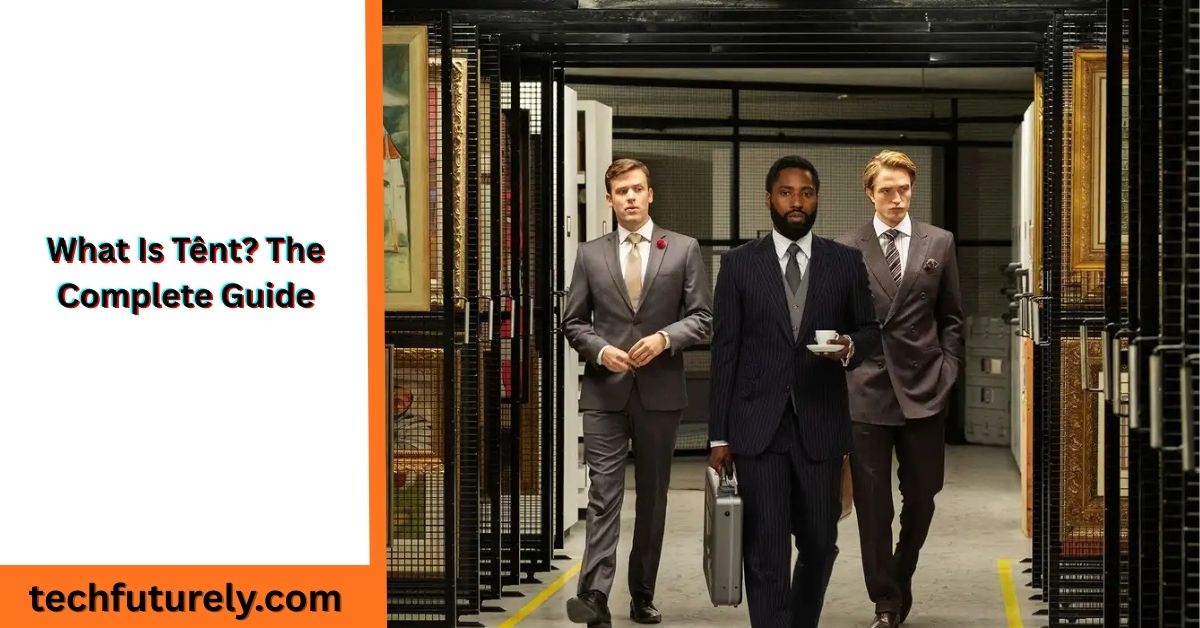
Tênt (also known as Tenet) is a 2020 science fiction action thriller film written and directed by renowned filmmaker Christopher Nolan. The movie features a high-stakes spy narrative that twists and turns through time, revolving around a secret organization called “Tenet” and a mysterious technology that inverts the flow of time itself. Starring an international ensemble including John David Washington, Robert Pattinson, Elizabeth Debicki, and Kenneth Branagh, the movie challenges audiences with its labyrinthine narrative and dazzling action. In fact, critics have described it as “a visually dazzling puzzle” that delivers the cerebral spectacle Nolan’s fans expect.
| Aspect | Details |
|---|---|
| Title | Tenet |
| Director | Christopher Nolan |
| Writer | Christopher Nolan |
| Producer | Christopher Nolan, Emma Thomas |
| Cinematography | Hoyte van Hoytema |
| Music | Ludwig Göransson |
| Release Date | August 26, 2020 (UK); September 3, 2020 (US) |
| Running Time | 150 minutes |
| Budget | $205 million |
| Box Office | ~$366 million worldwide |
| Language | English |
| Country | United States / United Kingdom |
| Genre | Science fiction, Action thriller |
| Rating | PG-13 |
Tênt Plot and Themes
Nolan’s film presents a complex plot centered on time inversion, where characters and objects move backward through time. The movie opens with a spectacular action scene at the Kyiv Opera House: the Protagonist (John David Washington) leads a CIA extraction that gets attacked. After surviving and passing a secret test, he is recruited by the group Tenet. This organization briefs him on a future threat involving objects and people sent from the future that have their entropy reversed.
Key themes include:
- Reversed Entropy: The idea of reversing entropy drives the story. In Tenet’s world, bullets and explosions can travel backwards through time. In one sequence, a masked figure performs the same action twice: one version moves normally, another in reverse. Nolan filmed many stunts practically so these backward sequences are literally the time-reverse of forward motion.
- Palindromes and the Sator Square: Nolan embeds palindromic motifs throughout. The title itself is a palindrome. The film uses all five words of the ancient Sator Square as names and locations: Sator (the villain’s name), Arepo (an art forger), Opera (the opera house scene), Rotas (an Oslo security company), and Tenet (the organization). This recurring palindrome theme reinforces the idea that time can flow both forwards and backwards.
- Action-Spionage Fusion: Tenet delivers high-octane spy-thriller action. It has all the trappings of a grand international thriller (exotic locales, covert ops, fancy tech), but every action sequence is amplified by the time-bending twist. One standout set piece splits a highway: one side with cars moving normally, the other with vehicles in reverse. Critics noted that Nolan’s approach feels like “the biggest train set a boy could have,” complete with crashing planes and cars for spectacle.
- Temporal Pincer & Paradoxes: The climax uses a “temporal pincer” strategy, where forces assault from opposite directions in time. This means multiple versions of characters coexist – for example, five versions of Neil appear during the final battle. The narrative plays with paradoxes, even including lines like “what’s happened, happened,” inviting viewers to consider if events can truly change or are fixed by fate.
Nolan has stated that while real physics inspire the ideas, Tenet is ultimately a fiction exercise. He consulted with physicist Kip Thorne on concepts but stressed that the film should be enjoyed as an entertaining puzzle rather than a scientific lecture. Viewers are encouraged to focus on the thrilling experience and the creative time twists.
Tênt Cast and Characters
The film’s ensemble cast includes:
- John David Washington as the Protagonist. Washington plays a resilient CIA operative who becomes an agent of Tenet. His character has no proper name in the film, but he anchors the audience’s perspective.
- Robert Pattinson as Neil. Neil is an intelligent, affable Tenet operative. He teams up with the Protagonist and provides crucial support. (Fans note that Neil’s personal journey contains a touching surprise by the film’s end.)
- Elizabeth Debicki as Katherine “Kat” Barton. Debicki portrays Kat, an art curator stuck in an abusive marriage to Sator. Her protective love for her son and her struggle for freedom add emotional weight. Reviewers praised Debicki for adding depth and “color to Nolan’s palette” through this role.
- Kenneth Branagh as Andrei Sator. Branagh plays Sator, a wealthy Russian oligarch who can receive messages from the future. Sator is the film’s villain with grandiose plans, and he keeps Kat under his control. Branagh’s portrayal (complete with a menacing accent) was noted as a classic Bond-style villain.
- Dimple Kapadia as Priya Singh. Priya is an arms dealer in Mumbai. Kapadia’s character initially seems to help the heroes but ultimately has her own hidden motives tied to Tenet’s mission.
- Michael Caine as Sir Michael Crosby. Caine makes a brief but memorable appearance as a veteran British intelligence officer. Even in a short role, he provides crucial context for the global stakes.
- Supporting cast: Fiona Dourif as Wheeler (a field-team leader), Aaron Taylor-Johnson as Ives (a Tenet commander), Clémence Poésy as Barbara (a scientist), and others. Each role adds to the complex story. Notably, because of time inversion, multiple versions of characters (like Neil and Kat) appear on screen, effectively enlarging the cast during key scenes.
Critics noted that the strong cast helps ground the film’s complexity. Debicki was singled out for her strong portrayal of Kat (Variety noted her “persuasive chemistry” with Branagh), and Pattinson’s charm as Neil was well received. Even reviewers who found the plot dizzying agreed that the actors kept things compelling. In short, the Tenet cast was seen as a key asset in carrying the audience through the challenging narrative.
Tênt Production and Cinematic Style

Creating Tenet was an ambitious global project. Nolan filmed across multiple countries and prioritized practical effects. Key sequences were shot on IMAX 70mm film for maximum clarity. The visual result is striking: critics repeatedly highlighted the film’s crisp cinematography. For instance, sweeping shots of New York’s skyline or the reflective waters of Venice pop with detail. Nolan’s team built elaborate sets (such as a partial city street for the inverted highway scene) and even flew a vintage Sopwith fighter plane over New York for the airport sequence, adding authenticity.
He also collaborated again with editor Jennifer Lame, who skillfully stitched together scenes that move in opposite directions in time, ensuring the story remains coherent despite its complexity. Costume designer Jeffrey Kurland chose sharp, functional attire – Kat’s wardrobe and the protagonists’ gear are sleek and purposeful. Even seemingly small details, like Kat’s high-heeled shoes, become plot points that showcase Nolan’s attention to realism.
747 Plane Crash
This is perhaps Tenet’s most talked-about stunt. Nolan actually purchased a real Boeing 747 and built a hangar set around it. They filmed the plane literally crashing into the structure in slow motion. The enormous fireball, collapsing metal, and wreckage you see are all real; visual effects were only used to remove wires and polish the shot. This daring practical effect amazed audiences and critics.
Chinook Helicopters
Four CH-47 Chinook helicopters were used in the climactic battle scene. They flew in formation carrying shipping containers, kicking up real dust and debris. Nolan briefly considered miniatures, but the crew found it more authentic and straightforward to use the real choppers.
Car and Elevator Stunts
Nolan filmed sequences of cars and people moving in reverse by doing them practically and then reversing the footage. For example, to shoot a car falling out of a sky crane, they filmed it dropping with a stunt driver and then ran the film backward to simulate rising. In Oslo, they built a rotating warehouse set so that cars could fall upside-down onto the street “backwards.” An elevator fight was shot on a hydraulic gimbal so that the camera could capture actors moving both forward and backward in time.
The music and sound design add to the immersive style. Composer Ludwig Göransson created a pulsating score that frequently syncs with the action. Some musical themes are even played backward to echo the inverted visuals. The sound mixing (gunfire, engines, echoes) often overlaps with the music, which some viewers find overwhelming, but it was meant to intensify the experience. Overall, Tenet looks and feels like a blockbuster made by hand. Its blend of gritty realism and mind-bending ideas embodies Nolan’s ambition.
Release, Box Office, and Audience Response
The release of Tenet was unusual due to the COVID-19 pandemic. Warner Bros. and Nolan delayed the film multiple times in 2020, aiming to have a genuine theatrical opening. When Tenet finally premiered (IMAX only) on August 26, 2020 in the UK and on September 3 in the US, it became one of the first big films to test audience demand after lockdowns.
Given the circumstances, Tenet performed strongly. Domestically it earned about $59.5 million, while internationally it made roughly $306.8 million, for a total of $366 million. This ranked it as the fifth-highest grossing film worldwide of 2020. On its ~$205 million budget, Tenet ultimately recouped its costs, which was notable at a time many films lost money. Analysts credit its performance to Nolan’s reputation and fans eager to see it on the big screen.
In February 2024 Tenet enjoyed a special IMAX re-release tied to Dune: Part Two promotions. This was rare for a recent movie and showed its lasting appeal. Home release (Blu-ray, streaming) followed in 2021, giving audiences a chance to re-watch the film in full. Many fans say that viewing Tenet at home – where you can pause and replay – reveals details missed on the first watch. Among science-fiction enthusiasts and Nolan’s followers, Tenet has gained a cult-like status.
Tênt Reception and Critique
Critical response to Tenet has been mixed but generally positive. On Rotten Tomatoes, the film holds around a 70% critics’ score. The consensus: “A visually dazzling puzzle… Tenet serves up the cerebral spectacle audiences expect from a Christopher Nolan production.”. In other words, critics agreed that Tenet impresses with its craft, even when they found the plot perplexing.
Positive reviews
Many critics praised the film’s technical audacity. LA Weekly called it “daring, surprising and entirely original.” The New York Times noted the stunning cinematography, score, editing, and even costume design as highlights. James Berardinelli (ReelViews) wrote that Tenet may be Nolan’s most conceptually challenging film, especially in its use of backward time and paradoxes. These reviewers celebrated how Nolan blended mind-bending ideas with blockbuster action.
Mixed reviews
Other critics found the story too convoluted. IndieWire gave it a C−, calling it a “humorless disappointment” that didn’t fully exploit its premise. The Chicago Tribune and New York Post also noted it’s Nolan’s most confusing work, though they admitted it’s still visually spectacular. A common complaint was the sound mixing; many viewers felt the music and effects sometimes drown out the dialogue. These criticisms meant that for some, Tenet felt more perplexing than thrilling.
Despite this, Tenet has developed a loyal fanbase. Post-release polls showed about 80% of viewers gave it a positive grade. The film sparked intense online discussion, with fans creating detailed timelines and theories for every scene. In 2025, a readers’ poll in The New York Times even ranked Tenet among the best films of the 21st century so far. The intense debate around the movie suggests that Tenet hit a nerve: it may divide opinion, but it’s undeniably memorable.
Awards
Tenet was recognized by major award shows for its technical achievements. It won the 2021 Academy Award for Best Visual Effects (for its groundbreaking plane-crash and inversion effects) and the BAFTA for Best Special Visual Effects. It was also nominated for Best Production Design at the Oscars. These honors underscore that Tenet is a technical marvel, even if its narrative challenges viewers.
Parents Guide and Rating
Tenet carries a PG-13 rating. It contains intense sequences of violence and action – many gunfights, hand-to-hand combat, car chases, and explosions – though nearly all graphic details are kept off-screen. Strong language is infrequent: a few instances of “shit,” “bitch,” and one “f–k” in the theatrical cut. Some mature themes may concern parents: Kat’s abusive husband threatening her and her child; a faked suicide attempt; and high-stress hostage situations.
- Violence & Action: High. Realistic and intense (soldiers die, cars wreck) but mostly without visible gore.
- Language: Mild profanity (a handful of curse words).
- Other: Kat briefly wears a bikini and a low-cut dress; sexual content is minimal. No drug use depicted (only alcohol by Sator). Themes of fate and sacrifice are present, which may intrigue older teens.
Common Sense Media recommends Tenet for ages 14 and up. They highlight positive messages of courage and teamwork among the heroes, but warn that the film’s fast pace, dark themes, and intense scenes mean younger children should probably skip it. In short, Tenet is a thrilling and stylish film, but best enjoyed with mature teens and adults.
The Legacy of Tenet
Tenet stands out in Nolan’s career as a bold, experimental blockbuster. Its release history made it a symbol of the fight to keep theaters open, and Nolan famously parted ways with Warner Bros. afterward in protest over streaming plans. Artistically, it reaffirmed Nolan’s identity: a director who combines high concepts with action spectacle. Many see Tenet as a thematic cousin to Inception, applying similar twists (like a final reveal) in a new context.
For audiences, Tenet offers a film to puzzle over. Its structure is deliberately non-linear, encouraging repeat viewings. Iconic set pieces – the folding highway, the inverted car, the sinking plane – have become memorable images in modern cinema. Nolan himself described Tenet as having a palindromic nature, and viewers often remark that the movie’s timeline loops back on itself. Whether some found it overcomplicated or not, its ambition and craftsmanship have given Tenet a lasting reputation. In many discussions, people admire how it pushes boundaries and makes them think.
