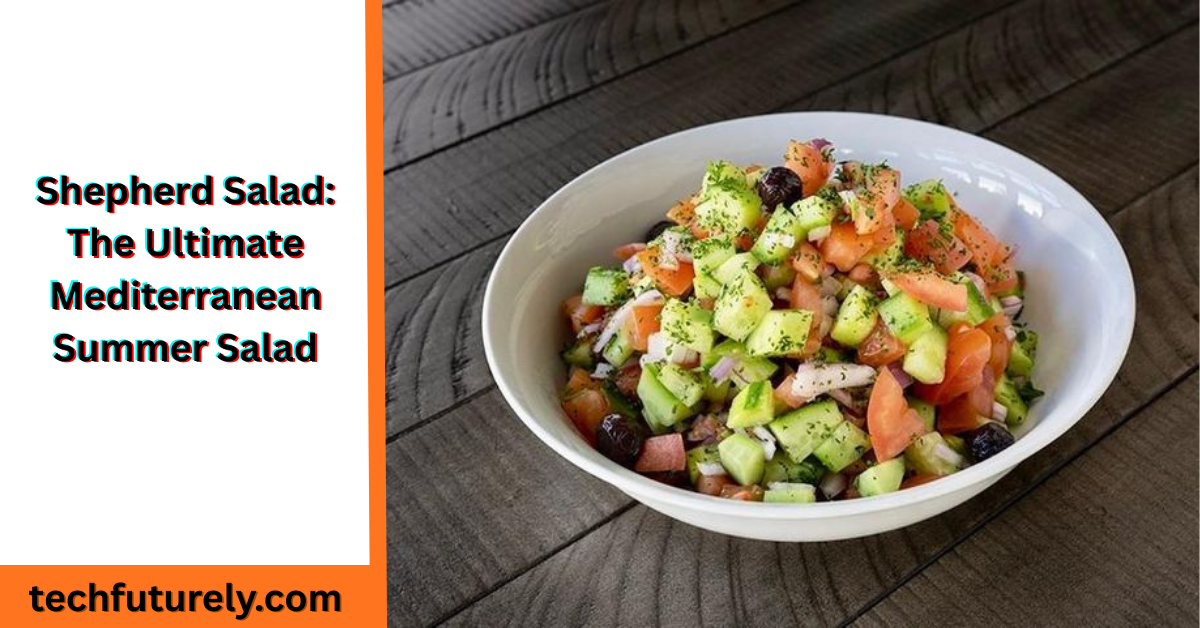
A classic Turkish shepherd salad (Çoban salatası) with chopped tomatoes, cucumber, peppers and herbs. Shepherd salad bursts with the fresh flavors of summer. This simple Mediterranean dish combines chopped ripe tomatoes, crisp cucumber, green bell pepper, onion and plenty of parsley, all dressed in olive oil and lemon juice. Originating in Turkey (its Turkish name Çoban salatası literally means shepherd’s salad), this bowl of crunchy vegetables has become a favorite from Turkish table spreads to Greek tavernas. Unlike a heavy pasta or potato salad, shepherd salad is light and colorful – a refreshing side that your taste buds (and diet) will love.
| Quick Facts | Details |
| Origin | Turkey (called Çoban salatası) |
| Alternate Names | Shepherd’s salad (English), Choban salad |
| Main Ingredients | Tomatoes, cucumber, green peppers, onion, parsley |
| Typical Dressing | Fresh lemon juice, extra-virgin olive oil, salt |
| Cuisine Type | Turkish/Mediterranean |
| Common Serving | Served chilled as a salad side dish |
| Approx. Calories per Serving | ~220 kcal (vegetarian, no feta) |
Shepherd salad is beloved for its simplicity and versatility. You can imagine shepherds in the Mediterranean countryside chopping garden tomatoes and cucumbers into a bowl, whisking them with olive oil and lemon – and there you have it. It’s sometimes compared to Greek salad, but with its own twist. In fact, many people wonder: Shepherd salad vs Greek salad – what’s the difference? The key distinction is that a traditional shepherd salad focuses on raw vegetables and parsley without cheese, while a Greek salad famously adds feta cheese, olives and oregano.
What Is Shepherd Salad?
Shepherd salad (Çoban salatası) is a traditional Turkish salad that dates back generations. According to Wikipedia, “Çoban salatası… is a salad that originated from Turkish cuisine, consisting of finely chopped tomatoes (preferably peeled), cucumbers, long green peppers, onion, and flat-leaf parsley.”. The dressing is famously simple – just lemon juice, olive oil, and a pinch of salt. In Turkish villages, this salad was an easy way for shepherds and families to use up the summer harvest and enjoy a healthy meal in the fields.
This dish quickly became a summer staple across Turkey, and even Greece and Cyprus. Food writers note that “Shepherd’s salad… is a favorite in Turkey and Greece where fresh tomatoes, cucumbers, and green peppers are sweet and plentiful during the summer months.”. Its bright, crisp flavor complements grilled meats and barbecue – you’ll often find it served with lamb kebabs, roasted chicken, or juicy burgers. In fact, the Food Network notes that a Greek-inspired shepherd salad is delicious served alongside pita bread or roast lamb.
Shepherd salad highlights Mediterranean diet principles: fresh produce, heart-healthy olive oil, and zesty citrus. It’s vegetarian (even vegan if you skip cheese) and packed with nutrients, making it popular among health-conscious readers. As a bonus, you can customize it endlessly – add olives and feta for a Greek twist, or sprinkle sumac and fresh mint for a more Turkish flair.
Shepherd Salad Ingredients and Variations
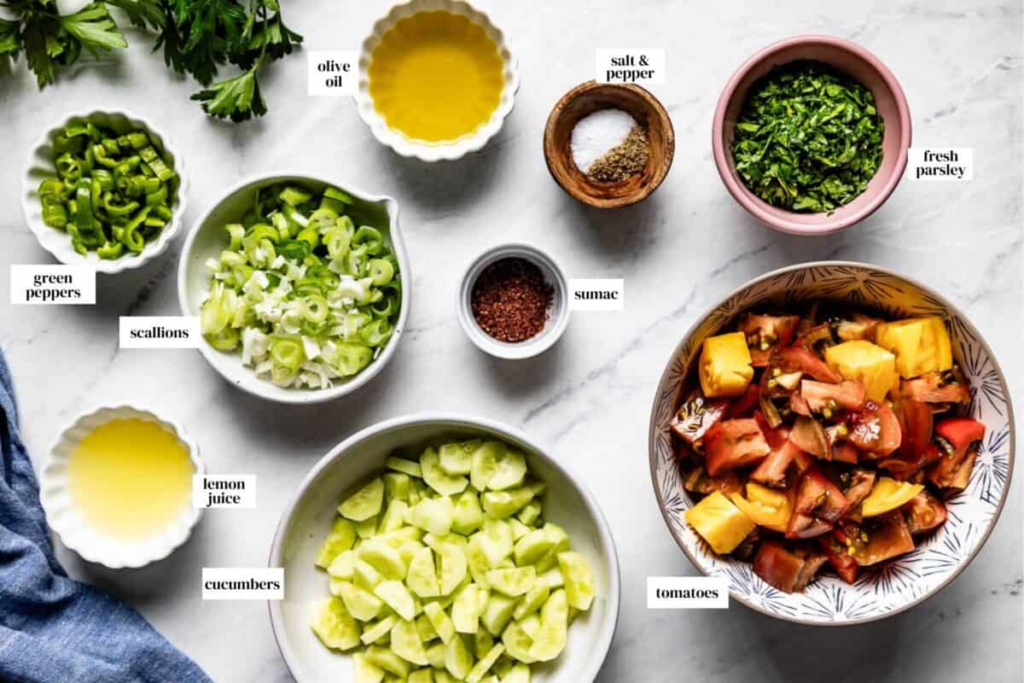
The classic shepherd salad ingredients are simple, seasonal vegetables and herbs. Here’s what you’ll need for a basic recipe:
- Tomatoes: Vine-ripened or Roma tomatoes are common. They add juiciness and sweetness.
- Cucumbers: Peel or leave the skin on. Persian or English cucumbers are crisp and less seedy.
- Green Peppers: Long green bell peppers (or mild Turkish sivri biber) give a subtle crunch and a hint of heat.
- Onion: Thinly sliced red or white onion adds sharpness. Red onion gives a nice color contrast.
- Parsley: Fresh flat-leaf parsley is essential for flavor and color. Mint is sometimes added for extra freshness.
- Olive Oil & Lemon Juice: A simple dressing of extra-virgin olive oil and lemon juice (or vinegar) ties everything together.
- Optional: Some cooks fold in briny black olives or crumbled feta cheese – these create a fusion between shepherd salad Greek style and Turkish style. In Turkey, olives and cheese are less traditional, but many modern recipes include them.
A handy table of ingredients might look like this:
| Ingredient | Role in Salad |
| Tomatoes | Juicy base; adds sweetness and acidity |
| Cucumbers | Cool crunch; hydrating vegetable |
| Green Bell Pepper | Mild crunch and a hint of peppery flavor |
| Onion | Sharp bite and color; red onion is sweeter |
| Parsley (Herbs) | Fresh, aromatic garnish; flat-leaf parsley is most common; mint adds zest |
| Lemon Juice | Bright acidity to dress the vegetables |
| Olive Oil | Rich, fruity oil that binds the flavors |
| Salt & Pepper | Basic seasoning to enhance all ingredients |
| (Optional) Feta | Salty creaminess (if included, moves it toward a Greek salad variant) |
| (Optional) Olives | Briny flavor and texture (common in Greek-style variants) |
Tip: For the best flavor, chop the vegetables roughly the same size. Some recipes even peel the tomatoes and cucumbers for a smoother texture. If preparing ahead, toss with dressing and let it sit for 30 minutes – this lets the lemon and oil permeate the veggies.
Turkish Shepherd Salad Ingredients in Depth
In a true Turkish shepherd salad (Çoban salatası), the focus is on the raw vegetables and parsley. A typical Turkish version does not include lettuce, feta or olives. Instead, you’ll sometimes find variations like sumac-dusted salad – where onions are sprinkled with tart sumac spice – or mint-added salad, as mint is abundant in summer markets. The traditional shepherd salad recipe simply begins with chopping the main veggies and herbs. A Turkish chef might say: “Chop a big bunch of parsley roughly; toss it with cucumbers, tomatoes, peppers, onion; add extra-virgin olive oil and lemon juice; season with salt. That’s it.”
How to Make Shepherd Salad: Step-by-Step
Cooking this salad is easy, but a few tricks can make it great. Here’s a straightforward shepherd salad recipe to follow:
- Prepare the veggies. Wash and dry the vegetables. Peel (if desired) and chop the tomatoes into bite-size pieces. Slice or dice the cucumbers and green peppers. Cut the onion into thin strips or small cubes. Chop or tear the parsley leaves. (Optional: chop some fresh mint for extra zing.)
- Assemble the salad. Put all the chopped vegetables and herbs in a large bowl. Gently toss them together so tomatoes, cucumber, peppers and onion are evenly mixed.
- Make the dressing. In a small bowl or jar, whisk together olive oil and lemon juice. A good ratio is about 3 tablespoons of olive oil to 1 tablespoon of lemon juice (you can adjust to taste). Add a pinch of salt and fresh-ground black pepper. (Many cooks also swirl in a teaspoon of red wine vinegar or apple cider vinegar for extra tang, and some like to sprinkle a pinch of sumac or a clove of minced garlic for flavor.)
- Dress the salad. Pour the dressing over the vegetables and toss gently to coat everything. The dressing should just cling lightly to the salad – you don’t need a lot.
- Marinate briefly. Let the salad sit at room temperature for 10–15 minutes before serving. This resting time lets the lemon-olive oil dressing soften the vegetables slightly and meld their flavors.
- Add final touches. Just before serving, you can add crumbled feta cheese and/or a handful of black olives, if you like. (Traditional Turkish shepherd salad usually skips them, but Greek-style shepherd salad often includes them.) Give one more gentle toss.
The Shepherd Salad Dressing Recipe is about as simple as it gets. You really only need extra-virgin olive oil and freshly squeezed lemon juice. Many Turkish recipes do exactly that: whisk or shake lemon juice with olive oil, a bit of salt and pepper. This dressing highlights the sweetness of the tomatoes and the crunch of the veggies, without overpowering them.
You now have a vibrant, crunchy salad ready to serve!
Cooking Tips:
- Use the freshest, ripest tomatoes you can find – they make all the difference.
- Some people seed the tomatoes and peppers before chopping to avoid extra liquid, especially if the salad sits for a while.
- If the salad will wait for more than 30 minutes, keep it chilled until serving to stay crisp.
Shepherd Salad vs Greek Salad (Comparison)
Though often mentioned in the same breath, shepherd salad vs Greek salad have notable differences. Here’s a quick comparison:
| Feature | Shepherd Salad (Çoban Salata) | Greek Salad (Horiatiki) |
| Origin | Turkey | Greece (on tables across Hellenic region) |
| Vegetables | Tomatoes, cucumbers, green bell peppers, onion, parsley | Tomatoes, cucumbers, onion, (often green or sweet peppers) |
| Herbs/Seasoning | Parsley (and occasionally mint or dill) | Dried oregano (classic), sometimes others like thyme |
| Cheese | None traditionally (feta is optional add-on) | Feta cheese is a hallmark (usually a big slab or crumbles) |
| Olives | Rare in traditional recipe (but sometimes added) | Kalamata or other black olives are standard |
| Dressing | Lemon juice + olive oil, salt | Olive oil (often red wine vinegar too), salt, oregano |
| Typical Serving | Side salad with grilled meats, kebabs, etc | Side salad with meals (also with grilled meats, fish, or bread) |
| Calories (approx.) | ~220 kcal per serving (plain) | A bit higher due to feta and olives (around 350–400 kcal) |
In essence, Greek salad tends to be richer – with salty feta and olives, plus oregano for Mediterranean flair – whereas shepherd salad emphasizes pure veggies and herbs. When both are served, you’ll easily spot the shepherd salad by the mound of parsley and lack of white cheese on top.
Despite differences, both are Mediterranean salads bursting with fresh produce. It’s common for restaurants to list both or to mix them up on menus. If you see a “Mediterranean salad” on an American menu, it might include lettuce or other twists, but traditional shepherd salad mediterranean style stays true to those chopped veggies and citrusy dressing.
Serving Suggestions and Variations
Shepherd salad is incredibly versatile. Here are some ideas to serve it up:
- With Grilled Meats: Serve it alongside grilled lamb kebabs, chicken skewers, beef shawarma or steak. The brightness of the salad cuts through the richness of meat. Many Turkish and Greek BBQ places will serve shepherd salad (or a Greek salad variant) as a standard side. Food bloggers note that this salad “goes very well with cookout menus, at summer potlucks, and with grilled steak and chicken”.
- As a Mezze or Appetizer: Include it in a mezze spread with hummus, baba ganoush, stuffed grape leaves, and warm pita. It also pairs perfectly with falafel, gyros, or souvlaki.
- With Bread: Scoop it up with torn pita bread or whole-grain flatbread. The olive oil dressing soaks nicely into bread.
- Chilled Main: Make a big serving of shepherd salad topped with chickpeas or lentils to turn it into a light vegetarian main dish. Sprinkle chopped nuts or seeds for protein.
- Stuffed in Pita: Wrap the salad (with some grilled meat or falafel) in a pita for a crisp, refreshing sandwich.
- Cooking Spice: A pinch of dried oregano or sumac over the top before serving brings extra aroma.
Try these variations to keep it interesting:
- Greek Style: Add crumbled feta cheese and kalamata olives at the end, and toss in a pinch of dried oregano. This hybrid shepherd salad Greek will echo the flavors of a classic horiatiki.
- Ezo Gelin Twist: For a heartier Turkish variation (inspired by Ezogelin), stir in a scoop of cooked red lentil bulgur salad (kısır) to make it more filling.
- Herb Mix: While parsley is standard, mix in chopped dill, mint or cilantro for different herbal notes. Turkish cooks sometimes add wild greens (like purslane or lamb’s quarters) in summer.
- Spicy Kick: Chop some hot green peppers (like Turkish Aleppo pepper or jalapeños) into the mix, or sprinkle in red pepper flakes for heat. Traditional shepherd salad is mild, but some people love it spicy.
- Sumac or Pomegranate: After tossing, sprinkle a dusting of sumac for tangy color, or drizzle a little pomegranate molasses for a sweet-tart twist. This adds depth without changing the core ingredients.
Looking for a quick fix? You can often find Shepherd Salad near me by checking local Mediterranean or Middle Eastern restaurants. Search for “Çoban salata” or “Arabic salad” menus. Many grocery stores with a good deli section also sell a similar chopped salad (though it may be labeled differently).
Nutritional Facts: Shepherd Salad Calories
Shepherd salad isn’t just tasty—it’s also healthy. Packed with raw veggies, it’s naturally low in calories and fat (aside from the healthy fat in olive oil). According to nutrition calculations for a typical recipe, one generous serving (about 1–1.5 cups) of classic shepherd salad (no cheese) has around 220 calories. That includes roughly 19g fat (mostly monounsaturated from olive oil), 11g carbohydrates, 5g protein, and a good dose of dietary fiber and vitamins. (If you add feta and olives, the calories will rise due to the cheese and oil.)
| Nutrient (per serving) | Amount | % Daily Value (DV) |
| Calories | 221 kcal | 11%* |
| Total Fat | 19 g | 24% |
| – Saturated Fat | 5 g | 24% |
| Carbohydrates | 11 g | 4% |
| Dietary Fiber | ~3 g | 12% |
| Sugars | 6 g | – |
| Protein | 5 g | 10% |
| Vitamin A | – (from tomatoes) ~5% DV | |
| Vitamin C | (from peppers/parsley) ~50% DV | |
| Calcium | ~10% DV (if with feta) | |
| Iron | ~10% DV |
*Percent Daily Values (DV) are based on a 2,000 calorie diet.
This salad shines for health-conscious readers. It’s gluten-free, vegetarian, and naturally low in sodium (you control the salt). The olive oil provides heart-healthy monounsaturated fats, while the fresh vegetables deliver fiber, vitamins, and antioxidants. Cutting up raw veggies also means you retain more nutrients versus cooking.
Shepherd salad calories stay relatively modest, making it a great choice for weight management or anyone counting macros. If you’re tracking, keep in mind that adding cheese, olives, or heavy dressings will increase calories – but even with feta and extra olives, one serving is usually under 300 kcal.
Tip: If you need extra protein, serve the salad alongside grilled chicken or toss in some chickpeas. It’s a flexible dish that fits all diets.
Tips, Tricks, and FAQs
- Use Fresh Herbs: For authentic flavor, don’t skimp on parsley. Roughly chop the leaves (not stems) and toss well. Mint is optional but lovely if you have it.
- Peeling: Peeling tomatoes and cucumbers is optional. Peeling adds a smoother texture; leaving the peel gives more fiber and color.
- Balancing Acidity: If the salad tastes too tart, you may have too much lemon. Adjust by adding a touch more olive oil or a sprinkle of sugar/honey if needed. Or add a splash of honey vinaigrette.
- Make It Ahead: You can chop ingredients a few hours in advance and store them separately. Dress the salad just before serving so it doesn’t get watery.
- Serving Chilled: Some prefer it slightly chilled, especially on hot days. You can even chill individual ingredients beforehand or cool the mixed salad for 15 minutes before eating.
Tables & Comparisons
For quick reference, here are some handy tables:
Shepherd Salad vs Greek Salad (key differences):
| Aspect | Shepherd Salad | Greek Salad |
| Cheese | None (optional feta) | Feta (traditional staple) |
| Olives | Rare (optional) | Common (Kalamata black olives) |
| Greens | No lettuce (raw veggies only) | Sometimes lettuce; usually veggies and cheese |
| Oregano/Sumac | Rare (sumac on onions in Turkey) | Oregano on top is classic |
| Calories (est.) | ~220 (no cheese) | ~350-400 (with feta and olives) |
Nutritional Info (per ~1 cup serving):
| Nutrient | Shepherd Salad (plain) | Greek Salad (typical) |
| Calories | 220 kcal | ~350-400 kcal |
| Total Fat | 19 g (mostly healthy fat) | ~30 g (more from cheese/oil) |
| Saturated Fat | 5 g | ~12-15 g (from cheese) |
| Carbs | 11 g | ~15 g |
| Fiber | ~3 g | ~4 g |
| Protein | 5 g (veg, cheese if added) | ~10-12 g (mostly from feta) |
FAQ:
What’s the difference between shepherd salad and çoban salad?
They are the same thing! “Çoban salatası” is simply Turkish for shepherd’s salad.
Can I add lettuce or other greens?
Traditional recipes do not use lettuce – it’s all chopped veggies. If you add lettuce, it becomes more of a green salad or an “arbuz salatası” (watermelon salad) variant.
How long does it last?
Best eaten within a day or two. Over time it can release water and get limp. Store leftovers in a sealed container in the fridge; give it a quick toss before serving again.
Can I make it without onion?
Yes, onions are optional. Some people soak sliced onions in water first to mellow the bite. If you omit onion, you miss some zing, but the salad is still bright and crunchy with tomato and pepper alone.
Conclusion
Shepherd salad is a colorful champion of easy, healthy eating. With just a knife and bowl, you can whip up this flavorful Turkish salad in minutes. The combination of tomatoes, cucumber, peppers and fresh herbs makes it burst with vitamins and crunch. Whether you call it Çoban salata, garden salad, or simply summer salad, it’s a crowd-pleaser every time.
By now, you’ve seen how to make a shepherd salad recipe from scratch, learned its ingredients and variations, and even compared it to its Greek cousin. So next time you’re in the mood for something bright and nourishing, remember this shepherd’s salad. It’s tradition in a bowl – and best of all, you can tailor it to your taste (extra garlic? love feta? crank up the sumac?), making each bite uniquely yours.
Bon appétit!
Sources
Authoritative sources were consulted to ensure accurate information about shepherd salad’s origin, ingredients, and nutrition, along with recipe details from well-known cooking resources. The above recipe and comparisons are based on traditional Mediterranean culinary practices and current recipe guides.
